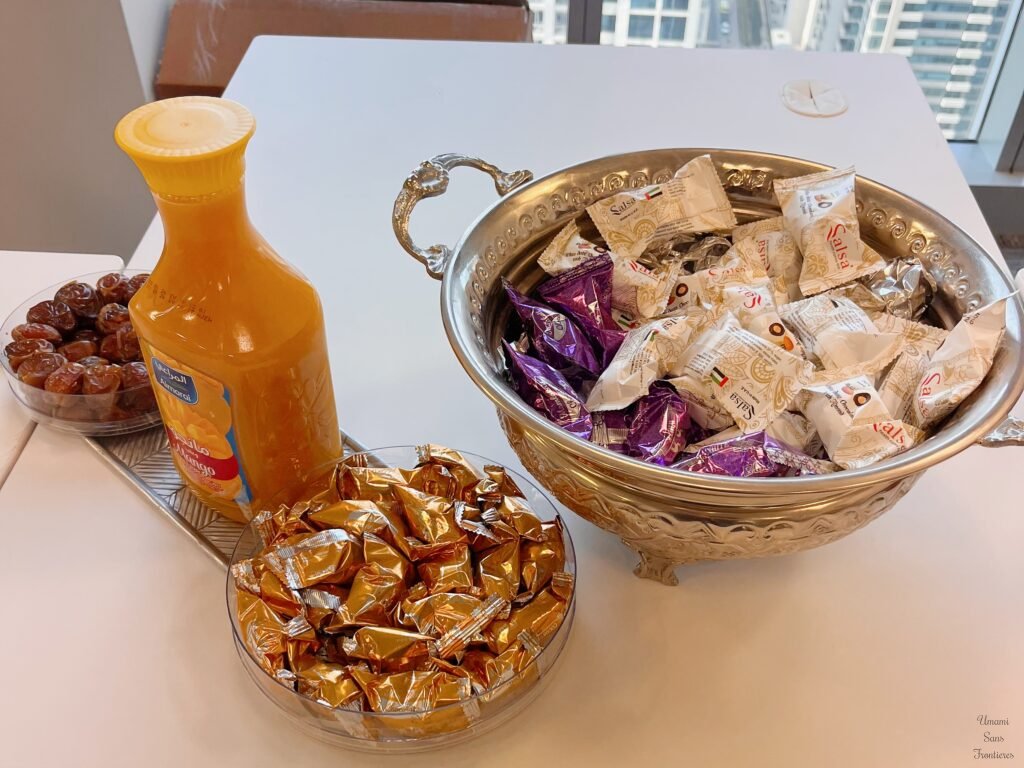
Last Friday morning, my husband sent me a photo with a short message.
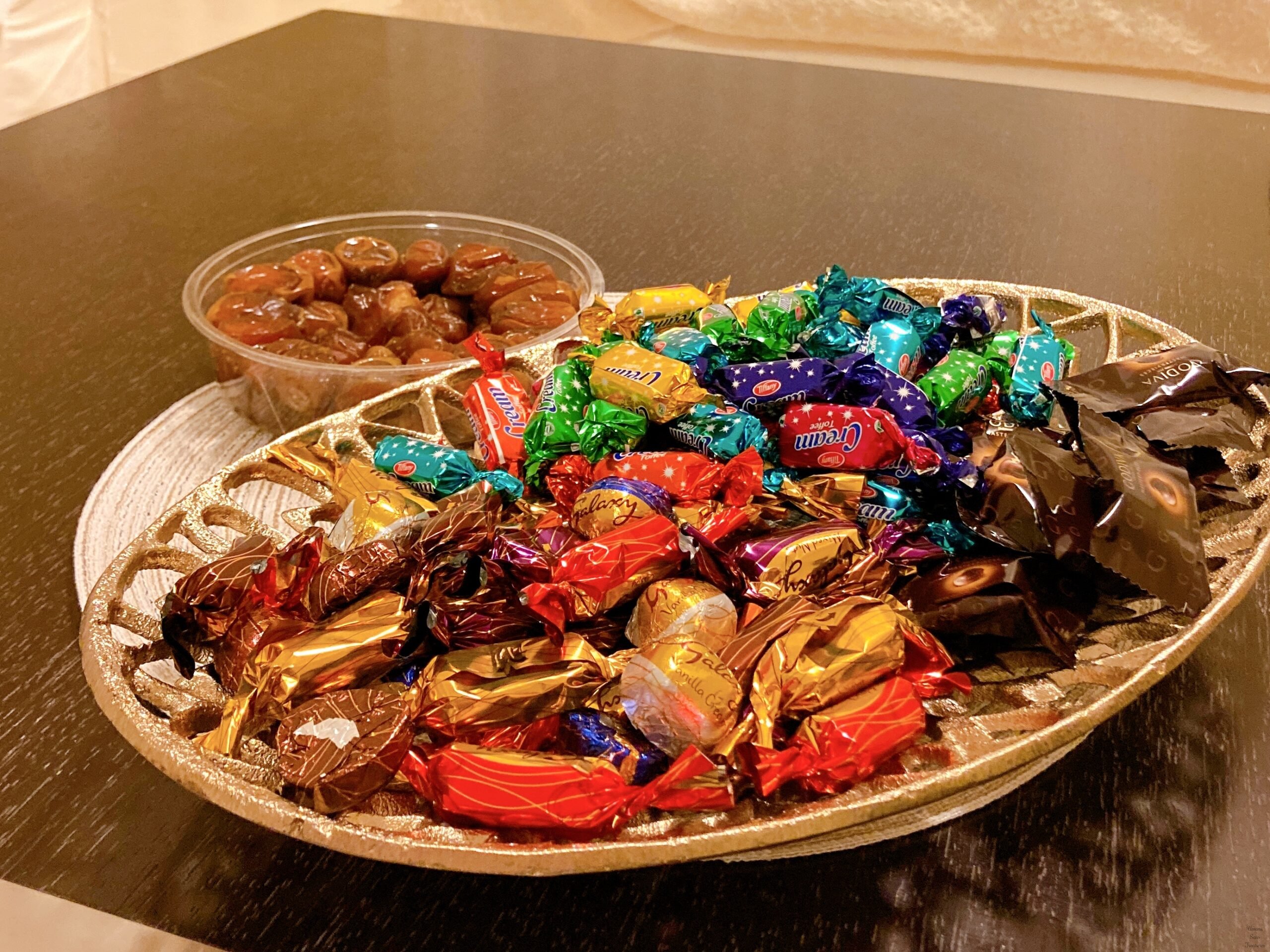
On his office desk were dates and a generous pile of wrapped sweets.
At first, I thought, What is this all about?
It turned out that one of his colleagues had prepared them for a special occasion.
That weekend, the UAE was celebrating Hag Al Laila (also known as Haq Al Laila), a traditional event that takes place just before Ramadan.
Children receive sweets from their neighbors, and families share treats with one another — it almost feels a little like Halloween, in its own gentle way.
A moment later, my husband texted again:
“Maybe children in our neighborhood will come by for sweets. You might want to prepare something, just in case.”
That immediately caught my attention.
And by that afternoon, I found myself out shopping for dates and candy.
🌙 Hag Al Laila — A Tradition of Sharing
This was actually my first time hearing about Hag Al Laila.
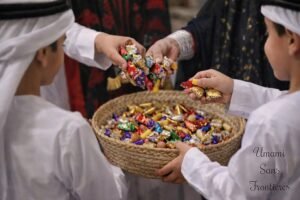
It is a cherished Emirati tradition held before Ramadan, when children go around collecting sweets, and families — even workplaces — prepare small treats to share.
More than just an “event,” Hag Al Laila is often seen as a way of spreading joy and generosity before the holy month begins.
✨ The Season Leading Into Ramadan
Hag Al Laila takes place around the 15th day of Sha’ban, the month that comes right before Ramadan in the Islamic lunar calendar.
Because this calendar follows the phases of the moon, the timing shifts slightly each year.
But Sha’ban is widely understood as a period when people begin preparing — spiritually and emotionally — for the month of Ramadan.
Ramadan is often described as “the month of fasting.”
From sunrise to sunset, Muslims refrain from eating and drinking.
But it is not simply about going without food.
Ramadan is also a time of reflection, self-discipline, gratitude, and compassion for others.
In the evenings, families gather to break their fast together in a meal called Iftar, strengthening the sense of community that defines this season.
What I find especially fascinating is how many cultures share similar traditions of sweets and seasonal turning points.
In France, there is Chandeleur, the day of crêpes.
In Japan, we celebrate Setsubun.
And here in the UAE, children have their own night of sweets — a gentle, joyful beginning to Ramadan.
Living abroad often brings unexpected discoveries like this: moments when different cultural rhythms quietly overlap.
🍬 A Glimpse of Sweets at School
We prepared sweets at home, and when my younger daughter came back from school, I told her about Hag Al Laila.
She smiled and said,
“Oh yes — they did that at school today.”
My daughter attends a French international school, but many of the students come from Arab families.
That day, younger children — perhaps elementary school age — were dressed in traditional white clothing and were handing out sweets.
My daughter, however, is in her second year of high school and right in the middle of exams, so she couldn’t stop to take any.
Still, she told me the hallway was filled with candy, neatly placed for everyone.
It seems that in Dubai, traditions like this are naturally woven into everyday school life.

🌃 A Quiet Weekend at Home
After hearing all this, I began to wonder…
Maybe children really will come to our door, too?
So we kept our little sweets ready and waited through the weekend, with dates and candies arranged neatly at home.
But in the end…
No one came.😅
Our neighborhood simply doesn’t have many Emirati families nearby, so perhaps that was to be expected.
And the sweets?
Well — they slowly turned into our weekend snacks 😋 And somehow, I ended up being the one enjoying them the most 🤣
Still, it was a sweet little reminder that Ramadan is just around the corner.