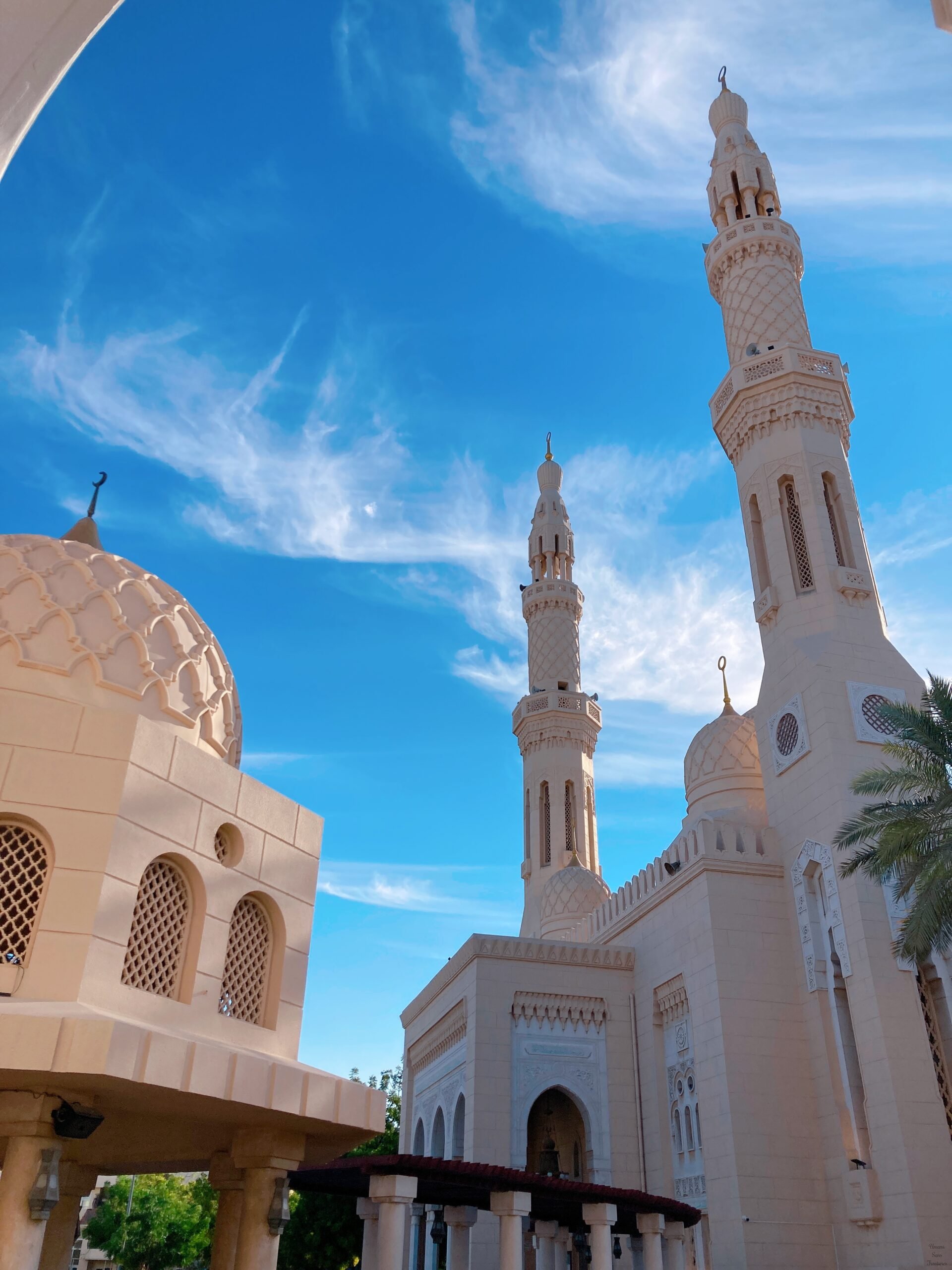
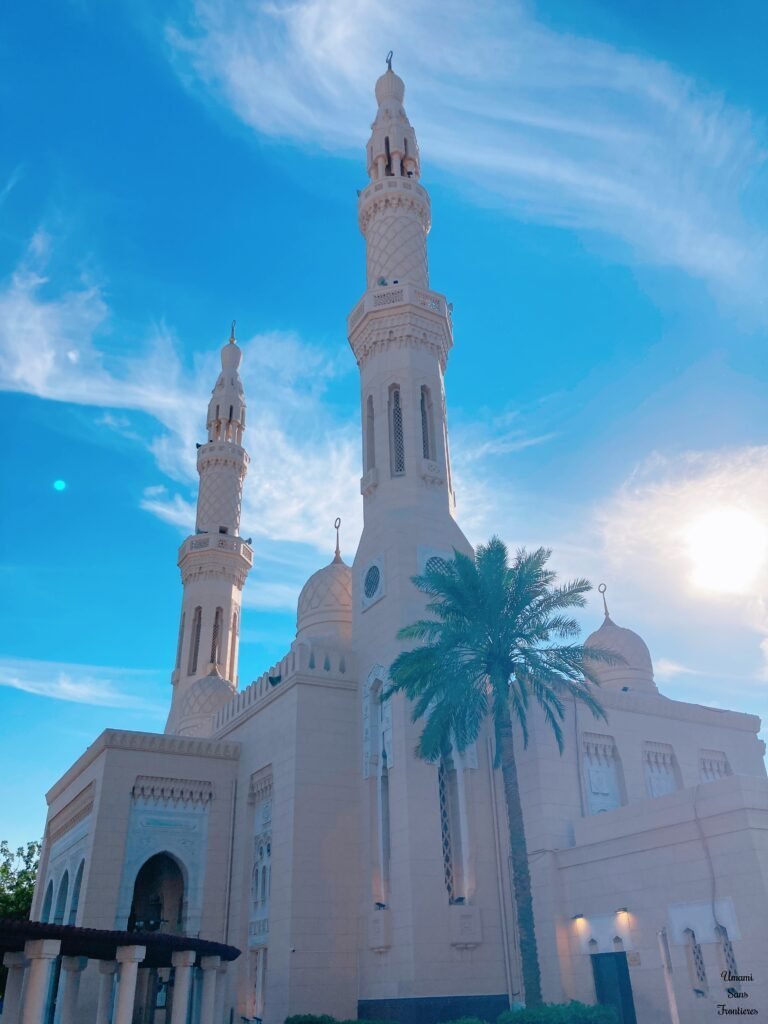
During the Christmas holidays, our eldest daughter, who lives in Paris, came to visit us in Dubai. Four months into our life here, it was our first opportunity to explore the city together as a family. This time, we visited a mosque in Dubai that is open to the public.
I have visited churches, along with temples and shrines in Japan and other Asian countries, but this was my first time visiting an Islamic mosque. Perhaps because of that, everything felt new and deeply fascinating.
Dubai is home to many striking mosques, and the one we visited was no exception. Bathed in sunlight, its beauty felt even more pronounced, quietly commanding attention.
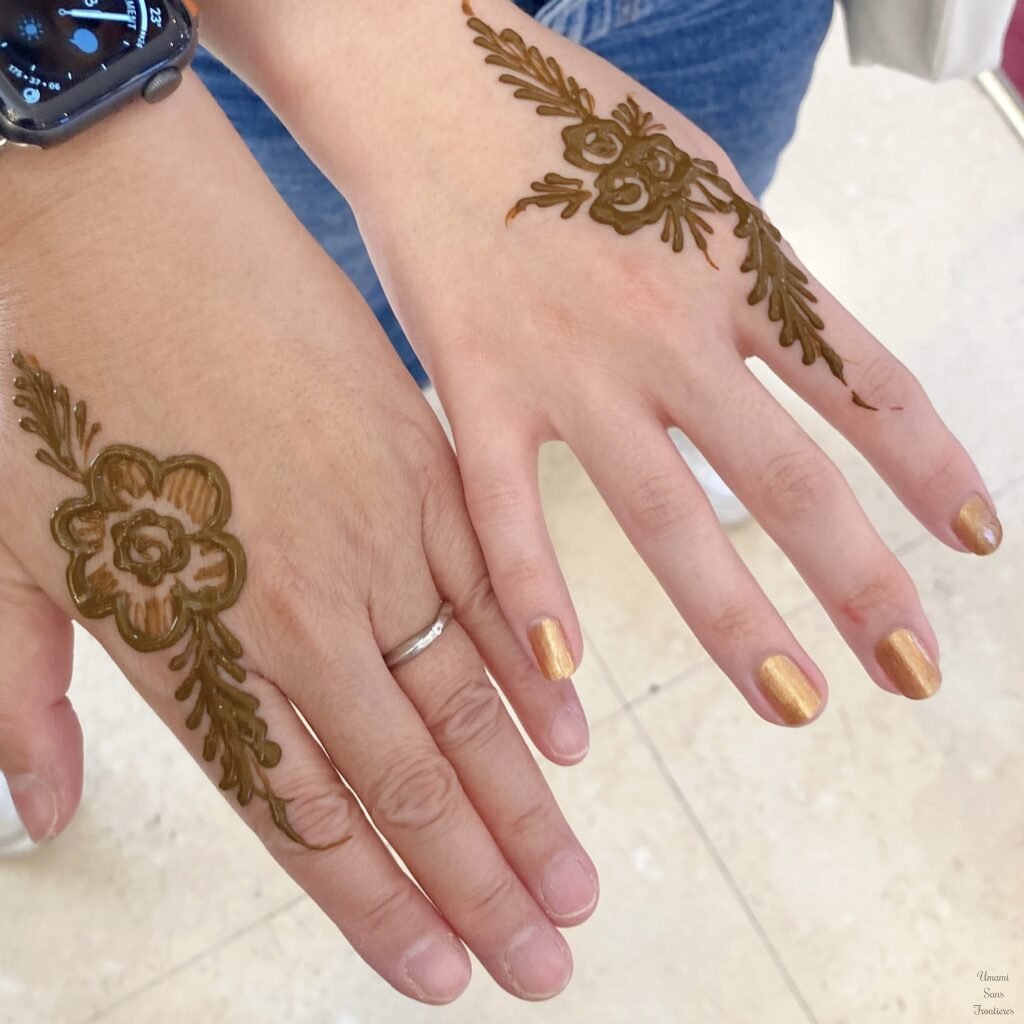
We arrived about an hour before the tour began. After purchasing our tickets, a woman inside the building offered to apply henna. My daughter and I were both curious and happily accepted. The design fades naturally within about a week, so there was no need to worry 😊
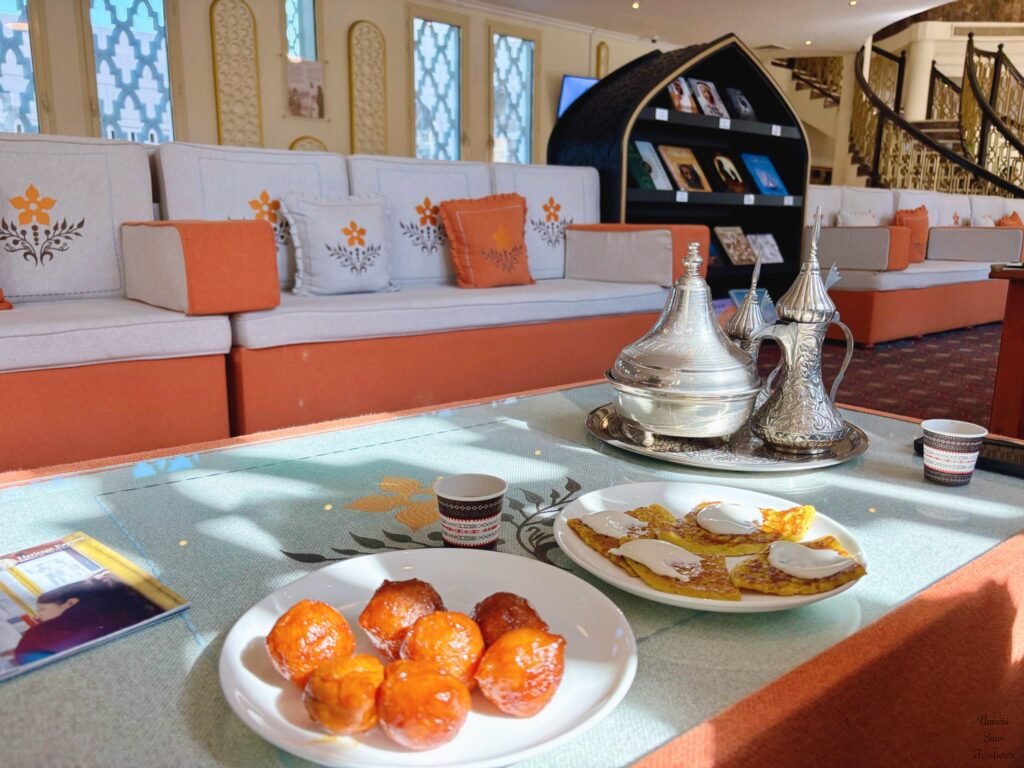
Next came tea time. At the back of the salon, coffee, tea, and Emirati sweets were beautifully laid out and carefully served.
One of the sweets, a small round pastry called luqaimat, resembled bite-sized doughnuts. Perhaps sweetened with honey, it had a comforting, almost nostalgic flavor. Another was chebab, a saffron-infused pancake with a soft, fluffy, and slightly chewy texture. We were also served Arabic coffee (gahwa) flavored with cardamom, along with tea. The atmosphere felt elegant and unhurried.
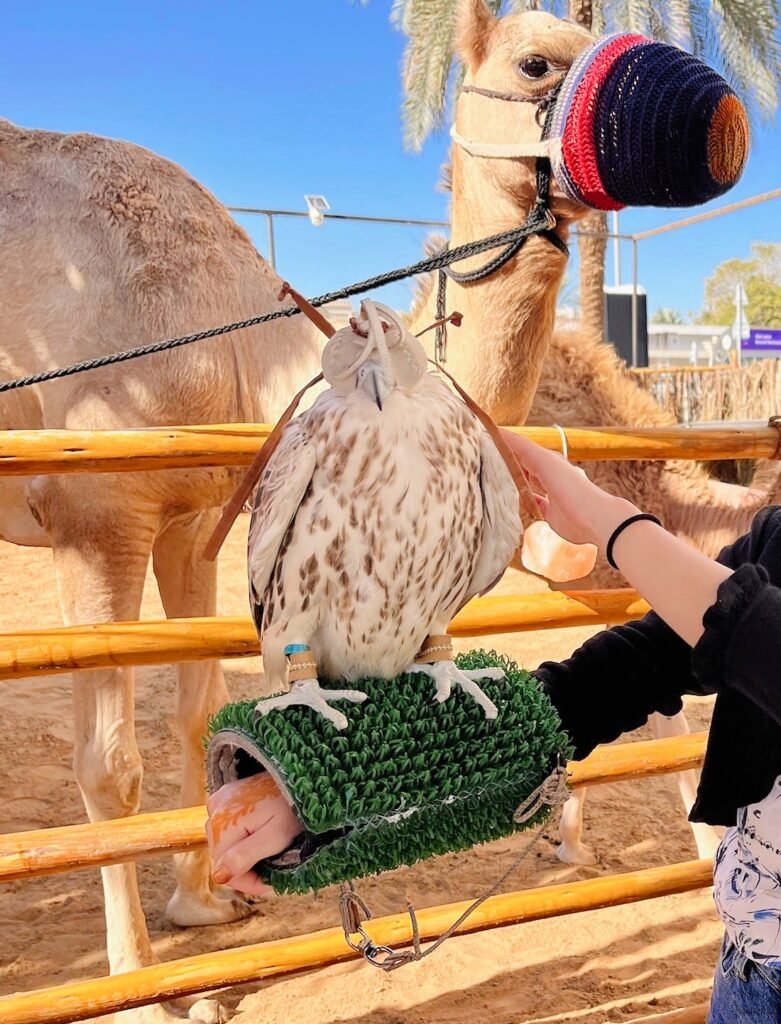
With some time to spare, we stepped outside to see camels kept on the grounds, and we were even invited to hold a falcon on our arm. It felt like a uniquely Emirati experience. We were told that camels in this region are dromedaries, with a single hump.
Before the guided visit began, we also spent some time at the small museum on the second floor. Though modest in size, it offers a visual history of the mosque spanning about 54 years through photographs. Displays of traditional clothing were also on view, offering glimpses not only of the architecture but of daily life and culture over time.
When it was finally time for the tour, we entered the mosque with our guide. Mosque interiors vary greatly, but this one gave me the impression of incorporating subtle Turkish design elements.
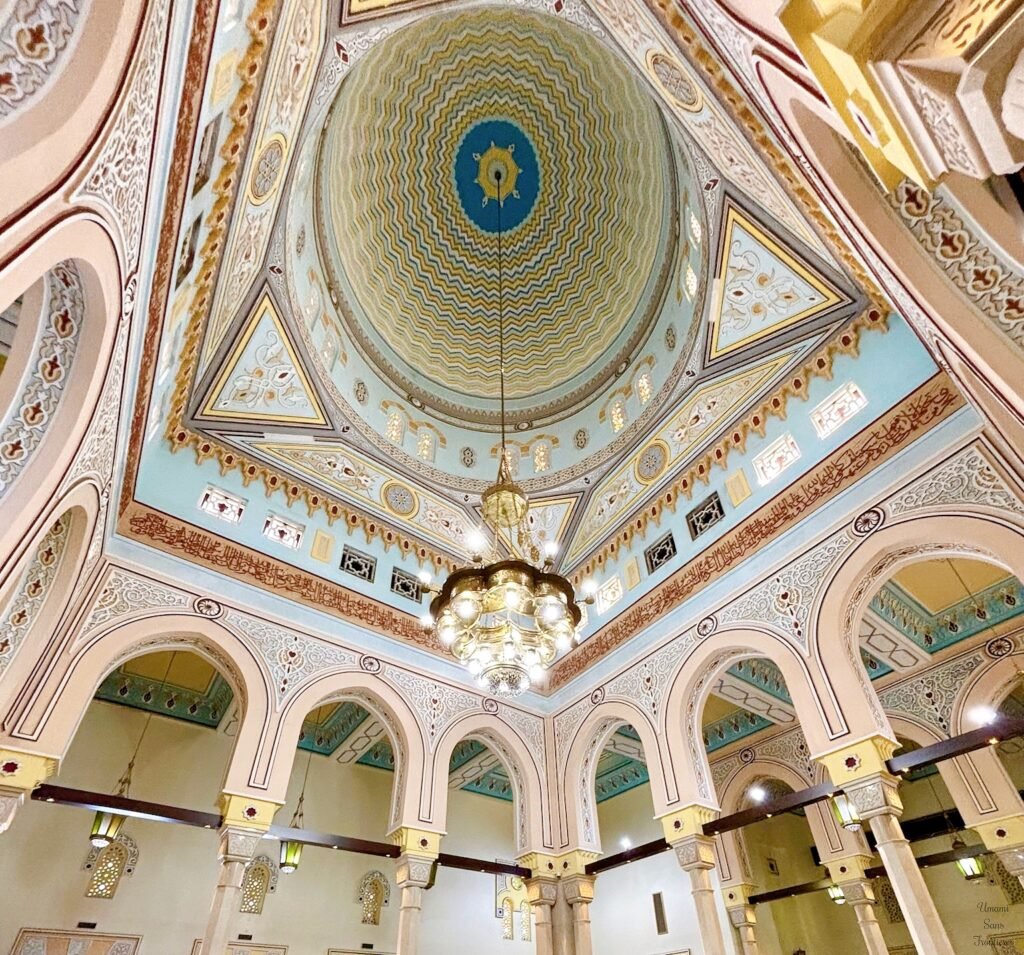
What left the strongest impression on me was the guide’s explanation. It was not limited to architectural details; she explained the fundamentals of Islam in clear and accessible language, especially for those encountering it for the first time.
She began by introducing the core principles of Islam: faith, prayer performed at prescribed times each day, helping those in need, fasting during Ramadan, and pilgrimage to Mecca for those who are able. What struck me was how closely these principles are woven into everyday life, rather than being reserved for special religious occasions.
In her explanation of faith, she also referred to other religions. Hearing them described with respect—as figures who conveyed God’s message to humanity—left a strong impression on me.
Prayer takes place five times a day, beginning around 5:30 in the morning. Living in Dubai, you become aware of this rhythm quickly. When it is time for prayer, voices can be heard throughout the city, not only near mosques but in many unexpected places. It is a call announcing the time for prayer. Interestingly, the sound reminded me slightly of Buddhist chanting heard at temples in Japan—something that blends naturally into the background and feels oddly familiar.
The guide also demonstrated how prayer is performed. Before praying, hands and feet are washed as a form of purification. As I watched, I was reminded of washing one’s hands at Japanese temples, as well as purification rituals found in Christianity. Although the religions differ, the idea of preparing oneself before prayer felt quietly universal.
At the end of the visit, there was time for questions. My daughter asked why some women wear what looks like a black mask. The guide explained that today, it does not have a single, fixed meaning. In the past, covering oneself was largely about privacy, while today people choose to wear it for various personal reasons. She even mentioned that some women wear it simply because they are not wearing makeup that day. Hearing that made me smile, as it reminded me of a friend back home who once wore a face mask for exactly the same reason.
Through this visit, I was able to learn about the fundamental ideas of Islam, and the way they were explained—the tone and care in the words themselves—made the experience deeply moving and memorable.
The word modest was used repeatedly throughout the explanation, and it stayed with me. It made me feel that humility remains an important value in the UAE today. In some ways, it reminded me of values traditionally associated with Japanese culture, both past and present, which made me feel a sense of familiarity.
At times, the politeness of service and the sense of personal distance I experience in Dubai feels surprisingly close to what I know from Japan. Perhaps these similarities are quietly rooted in Islamic teachings. That thought lingered with me as a gentle aftertaste of the visit.
🗒️Note
I was also surprised to see a group of Japanese students on the same tour. Dubai can feel geographically distant from Japan, but it may be more popular among Japanese visitors than one might expect.
It is also worth noting that appropriate attire is required for the visit. Women need to cover their heads with a scarf, wear clothing that covers the ankles, and ensure sleeves are of sufficient length. Scarves are often provided on site, but it is helpful to be aware of the dress requirements in advance.