During our autumn trip to Munich, we wandered through the city at a relaxed pace, discovering layers of history, culture, and everyday life along the way.
In my previous post, I wrote about the “Bavarian character” that surprised us—so different from Berlin—and about the beer and traditional dishes we enjoyed.
In this second part, I’d like to share the places that left the strongest impression on me, together with the stories behind them.
And of course, there will be food again at the end—Bavarian cuisine always finds its way back into the journey!
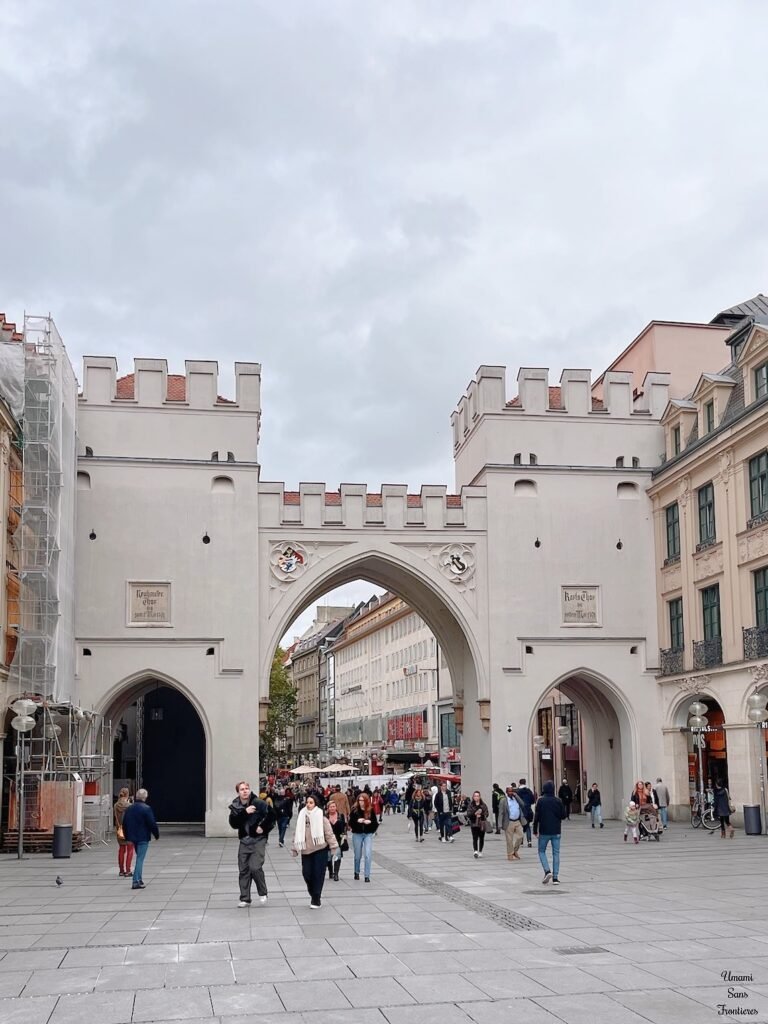
🏰 Karlstor: The Gateway to the Old Town
Standing at the entrance to Munich’s old town, Karlstor is a reminder of the medieval fortifications that once protected the city.
Beyond the gate, markets and merchants once bustled along the streets—it was literally the “front door” of Munich.
Today it marks the lively beginning of the main shopping street, but stepping under the archway still gives you that little feeling of entering “the heart of history.”
⛪️ St. Peter’s Church: The Oldest Sanctuary Watching Over Munich
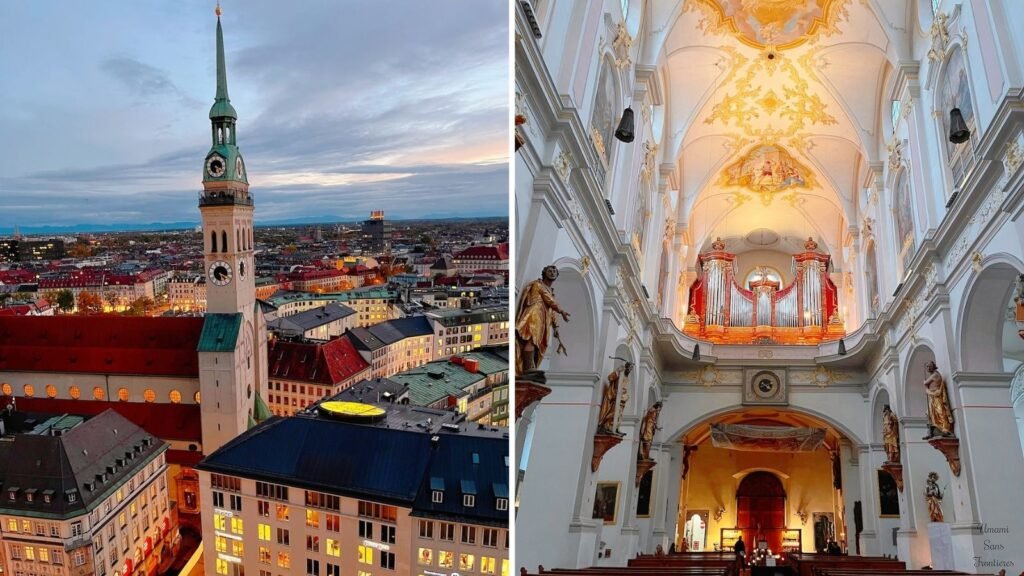
Located in the center of the old town, St. Peter’s Church is believed to have been founded in the 8th century, making it the oldest church in the city.
Fires, wars, and repeated reconstructions have layered architectural styles one over another—Romanesque, Gothic, Baroque, and Rococo—all blending into its current form.
Inside, the bright frescoes immediately draw your eyes upward. The mix of simplicity and ornate detail felt very “old Munich,” full of charm and warmth.
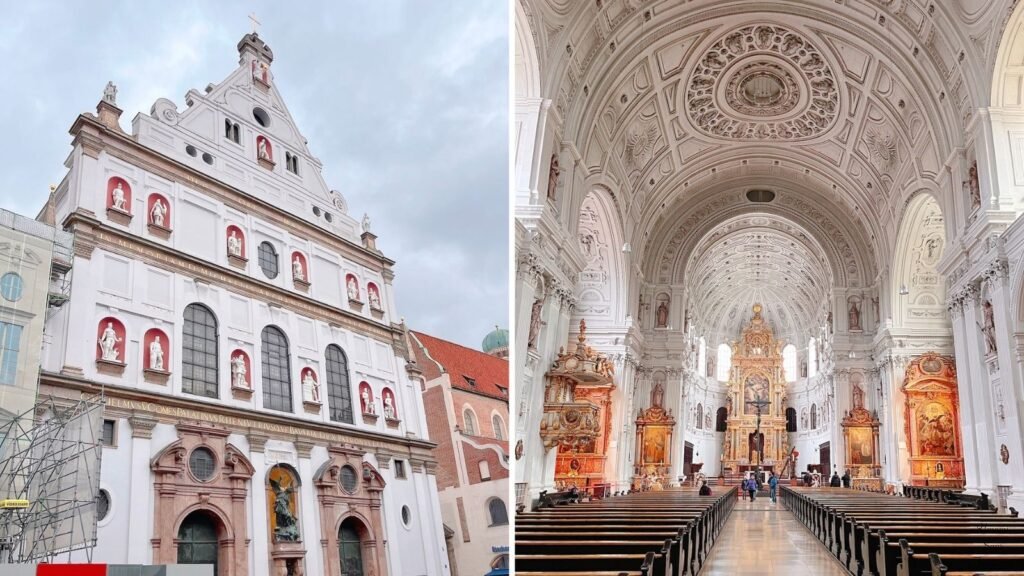
⛪️ St. Michael’s Church: Baroque Brilliance in Southern Germany
Built in the 16th century, St. Michael’s Church is often described as a symbol of the Counter-Reformation in southern Germany. Many artists from Rome were invited to Munich in this period, and the church still reflects their influence.
Stepping inside, I was struck by the soaring white reliefs that seem to float in the light. Tiny angels nestled between the columns add a playful touch—you can’t help but pause and take it all in.
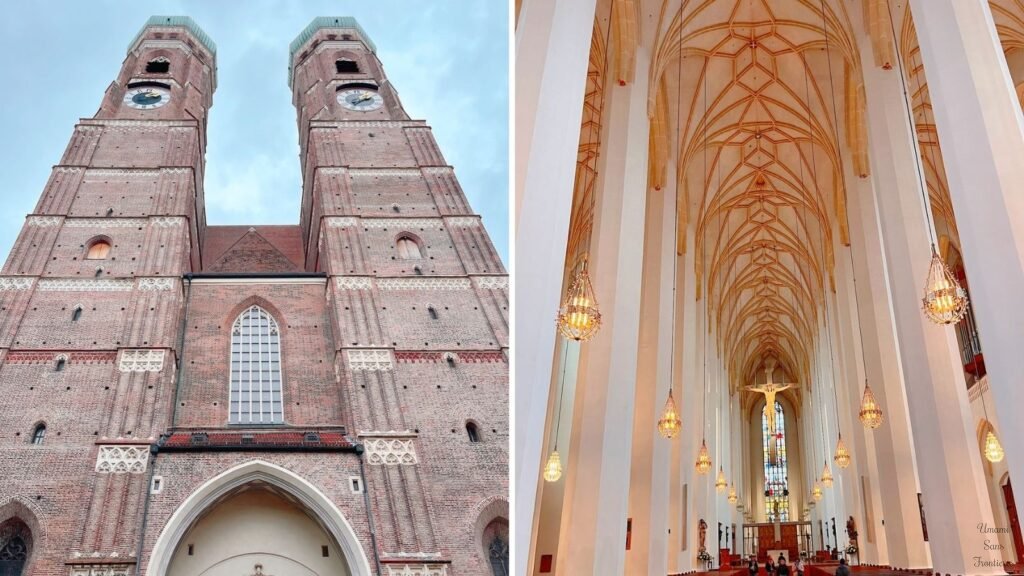
⛪️ Frauenkirche: Munich’s Icon of Stillness
We then visited Frauenkirche, built in the late 15th century and instantly recognizable for its twin domes that define Munich’s skyline.
The city even has a building-height rule that prioritizes keeping these domes visible—proof of its symbolic importance.
Despite the strong Gothic exterior, the interior is surprisingly simple. Tall white pillars stretch rhythmically toward the ceiling, creating a peaceful space entirely removed from the noise outside.
Within minutes, you can visit churches with completely different styles—a reminder of how Munich’s layers of history coexist. And perhaps due to its location and heritage, I felt the strong influence of Catholic culture everywhere we walked.
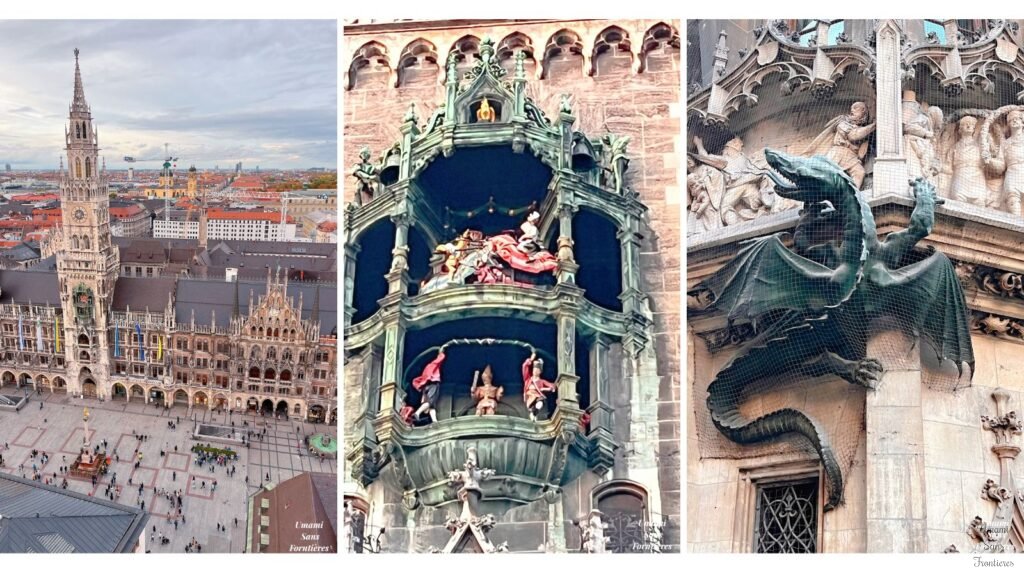
🏰 Marienplatz & the New Town Hall: Stories Carried Through Time
At the heart of the old town stands the New Town Hall, built in the late 19th century. The choice of Neo-Gothic architecture was intentional—a way for the rapidly modernizing city to express what “historic Munich” should look like.
As evening approaches, people gather in the square to watch the Glockenspiel, the famous mechanical clock.
We joined them, waiting in anticipation 😊
Small figurines reenact 16th-century celebrations and dances—like watching a charming piece of moving history.
My husband spotted an intriguing sculpture on the corner of the building: a dragon relief. It symbolizes the plague, depicted as a medieval monster, carved as a protective prayer for the city. Even in the busiest square, history hides quietly in the details.
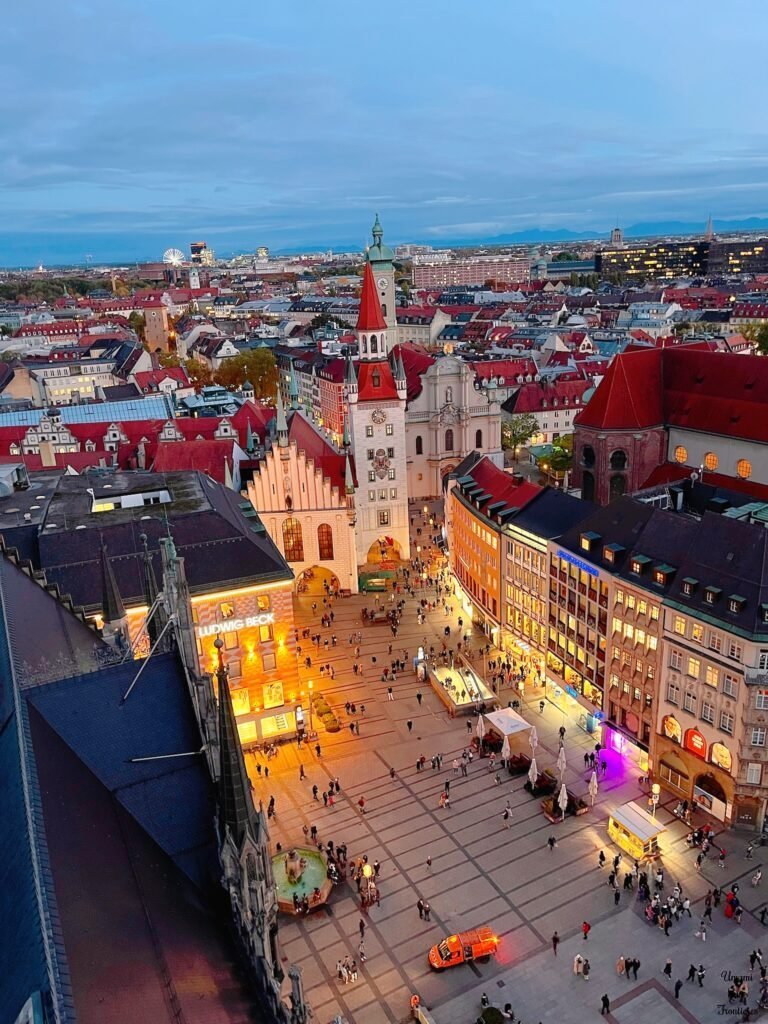
✨ Climbing the Tower: Munich in the Evening Light
Despite the chilly wind, we climbed the Town Hall tower. From above, red rooftops spread out tightly across the old town. After World War II, these roofs and building heights were carefully restored to preserve the cityscape.
As the sky changed color and the lights of the square began to glow, the atmosphere became magical.
We soaked in the view while a lively brass band played below—so lively that we ended up dancing together as a family 😄
🌿 English Garden: Two Centuries of Green for the People
The next day, we traded the old town’s stone streets for a peaceful expanse of nature.
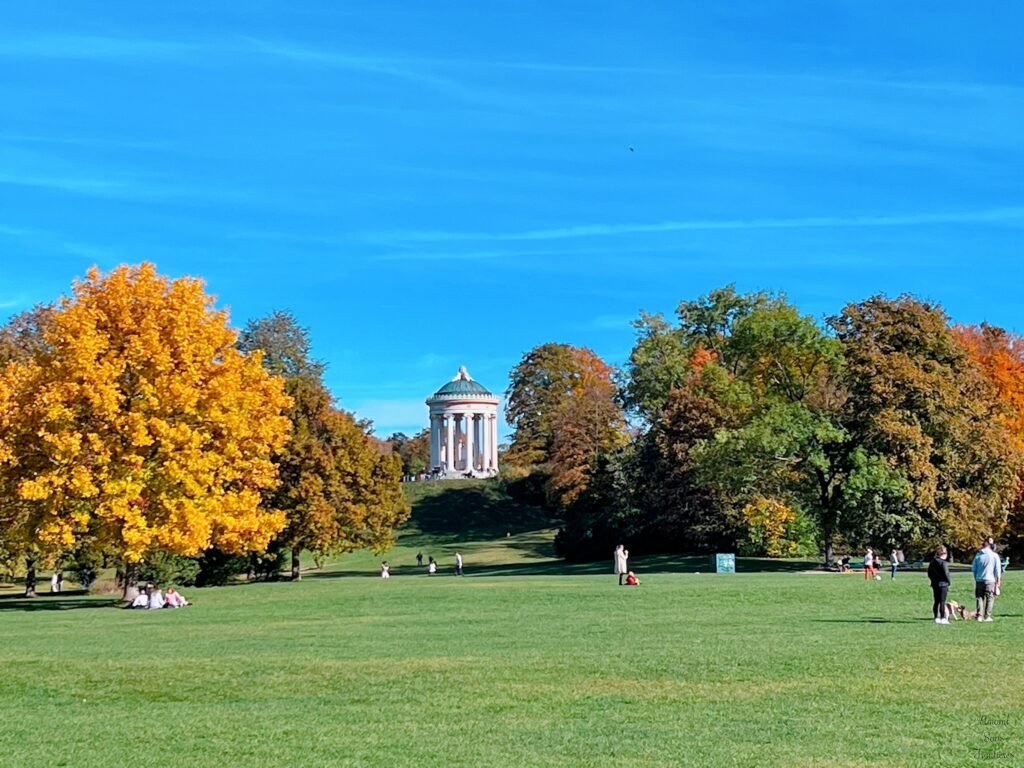
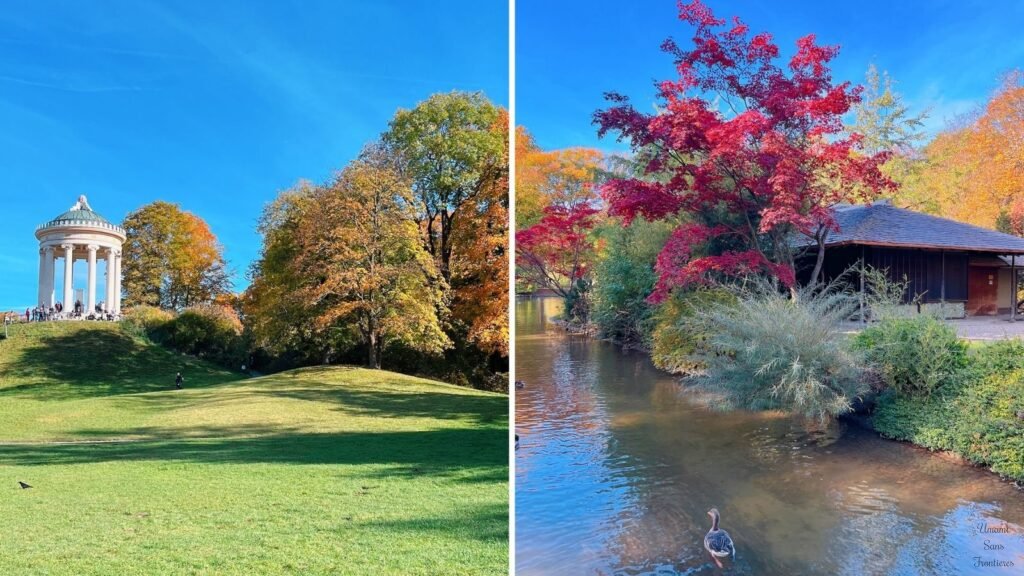
Created in the late 18th century on former military training grounds, the English Garden was one of the first public parks designed “for the people.” Its rolling landscape and natural waterways reflect the ideals of the English landscape garden, still beautifully preserved today.
From the small hilltop temple, Monopteros, we could see greenery stretching endlessly. Families picnicked, friends strolled, and the atmosphere felt wonderfully relaxed.
We also stumbled upon the Japanese Garden, built for the 1972 Munich Olympics—finding Japanese maple leaves glowing in autumn colors in the middle of Munich was such a pleasant surprise for us.
🏰 The Residenz: A Palace Layered With Royal Aesthetics
The Munich Residenz, the palace of the Bavarian royal family, grew over nearly 400 years.
Because of its long history of expansions, the entire complex feels like a visual timeline of European art.
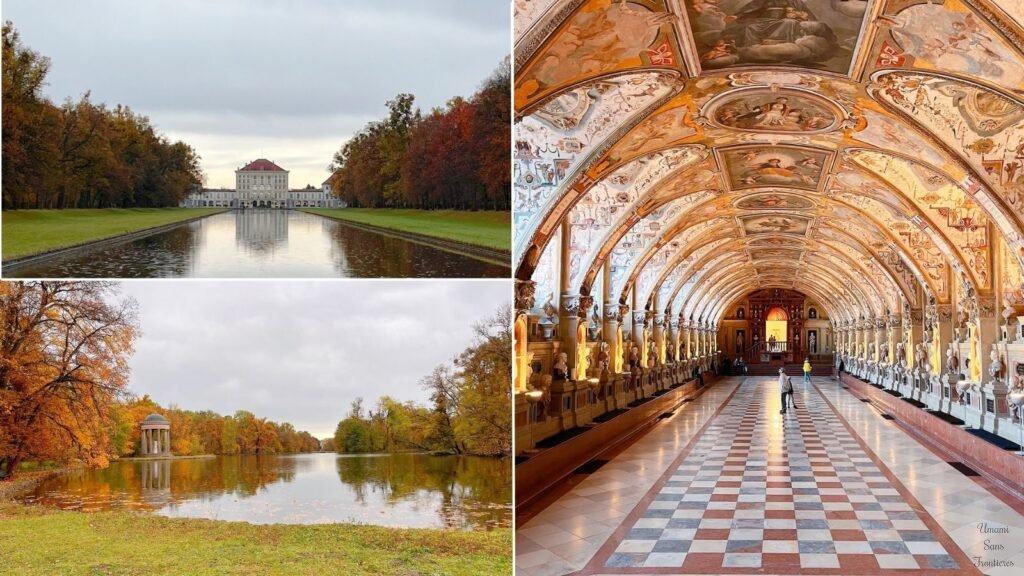
We began in the Antiquarium, one of the largest Renaissance halls in Germany. The endless arches and ceiling frescoes are breathtaking.
As we moved through the palace, rooms shifted from glowing Baroque and Rococo halls to a serene Neoclassical throne room. Every era’s idea of beauty is preserved here, room by room.
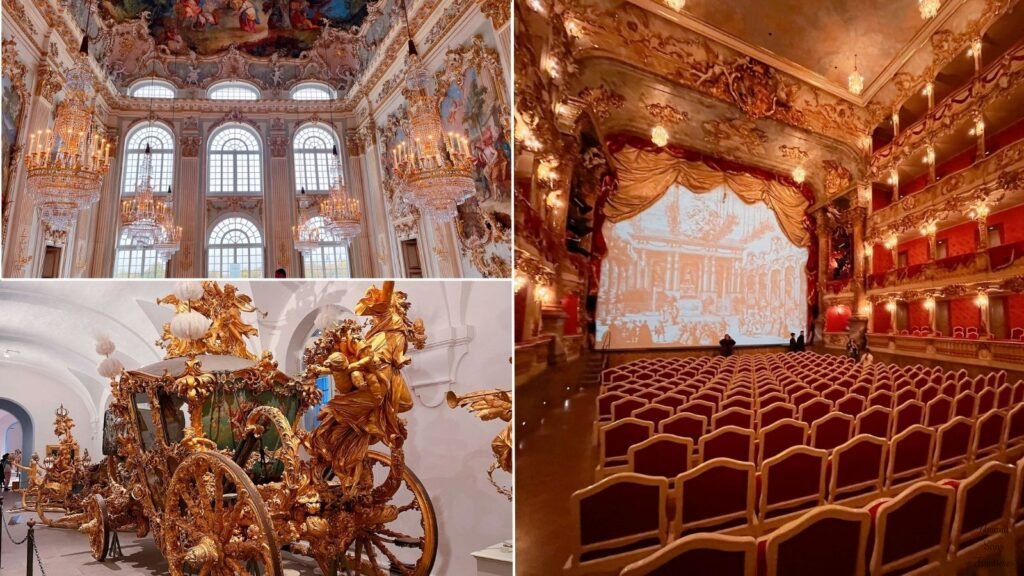
And at the end waits a true gem—the Cuvilliés Theatre. Dazzling in red and gold, this small Rococo theater feels like stepping into an 18th-century royal performance.
🏰 Nymphenburg Palace: A Summer Retreat Filled With Elegance
A short distance from the city center lies Nymphenburg Palace, built in the 17th century as the Bavarian electors’ summer residence.
Its broad gardens and tranquil lakes reflect the leisurely rhythms of court life.
Inside, the grand Rococo hall decorated in white and gold is so enchanting that it feels as though a story is about to begin.
In the carriage museum, elaborately gilded royal coaches reveal the splendid world of the Bavarian court.
Standing before the long façade of the palace, I truly felt that Munich is—and always has been—a “royal city.”
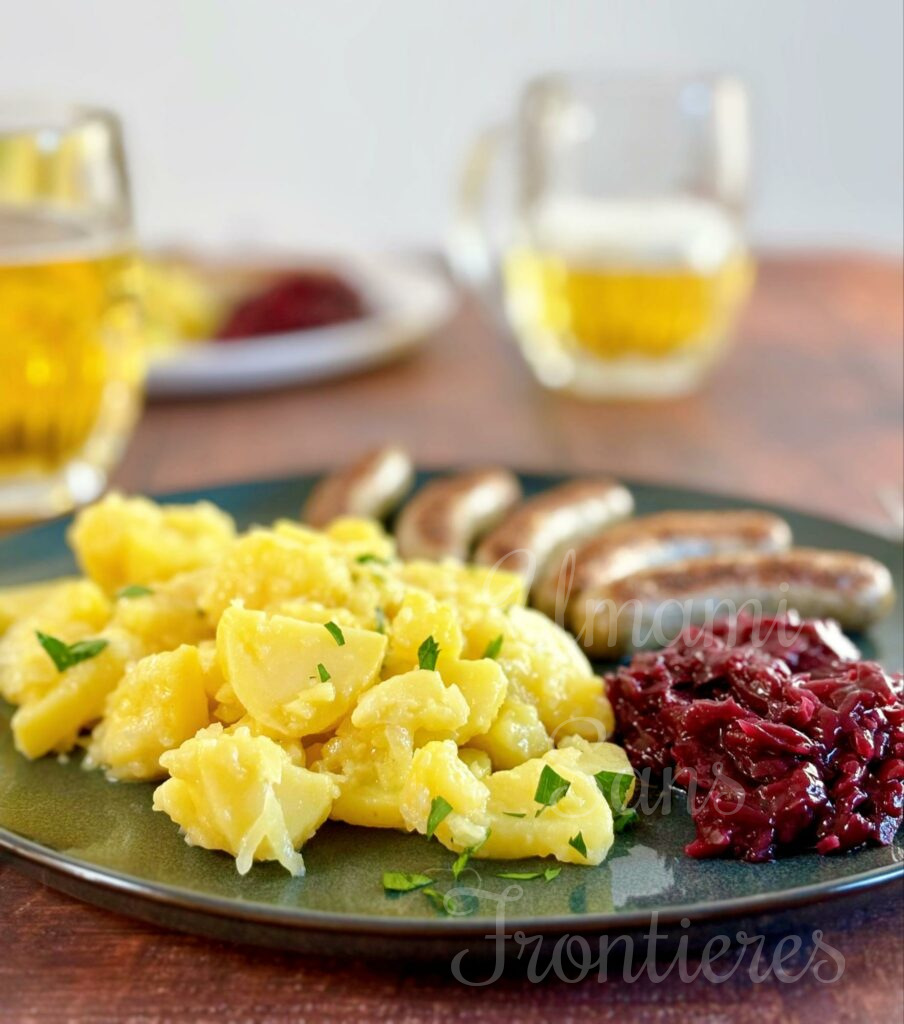
🍺 Nürnberger Sausages and Potato Salad
And finally… dinner!
Continuing from my last post, we enjoyed more of Munich’s comforting, down-to-earth cuisine.
One of my absolute favorites is Nürnberger sausages—small, herb-infused, perfectly salty, and just made for beer.
I expected the potato salad to be the warm southern German style, but what arrived was the cool and refreshing version. That little surprise left such a strong impression that I now recreate it at home in Berlin using vinegar and broth.
And to finish off the meal, I couldn’t resist one of my all-time favorites 🩷 Apfelstrudel.
Paper-thin layers of pastry wrapped around sweet-tart apples… 🍎 it’s pure comfort.
The crisp, delicate crust and the gently spiced apple filling are simply irresistible.
Enjoy it with whipped cream or a scoop of vanilla ice cream, and it becomes pure happiness on a plate. 😋✨
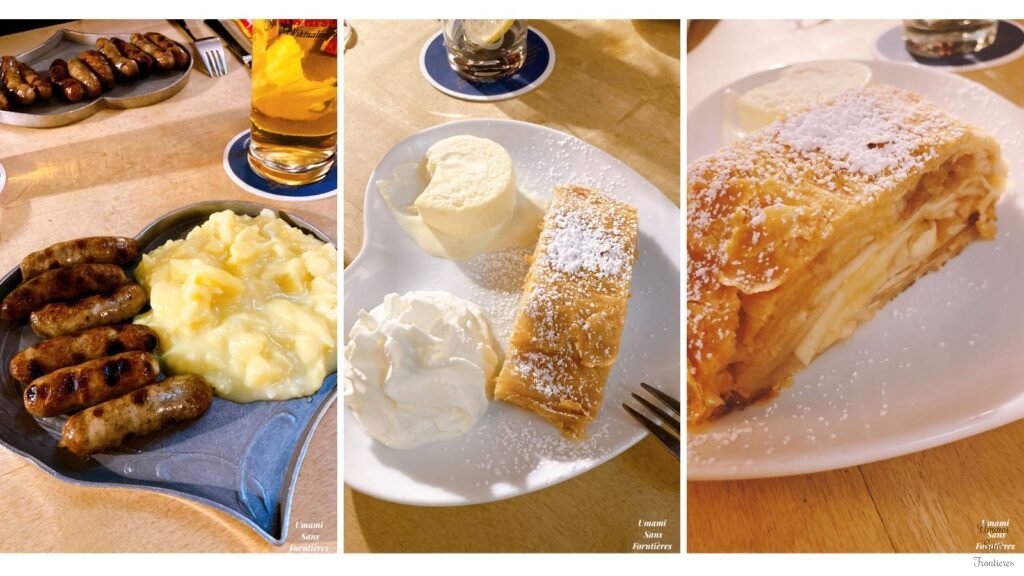
This “refreshingly tangy” Bavarian-style potato salad and the classic Apfelstrudel dessert were such memorable discoveries in Munich.
Our family’s version of the potato salad is also shared on Umami, so feel free to check out the recipe!
👉 Kartoffelsalat – Classic German Cold Potato Salad