If you are visiting Munich, one place that truly deserves a spot on your itinerary is Neuschwanstein Castle.
In this post, I would like to share my experience of visiting the castle on a day trip from Munich.
It is a place I had seen countless times in photographs and videos, yet being there in person left a much deeper impression. Not only the castle itself, but also the journey leading up to it, the surrounding nature, and the story of King Ludwig II stayed vividly in my mind.
🏰Hohenschwangau Castle
Our visit began at Hohenschwangau Castle. Compared to Neuschwanstein, its interior is relatively modest. This castle is known as the place where King Ludwig II spent his childhood and early youth.
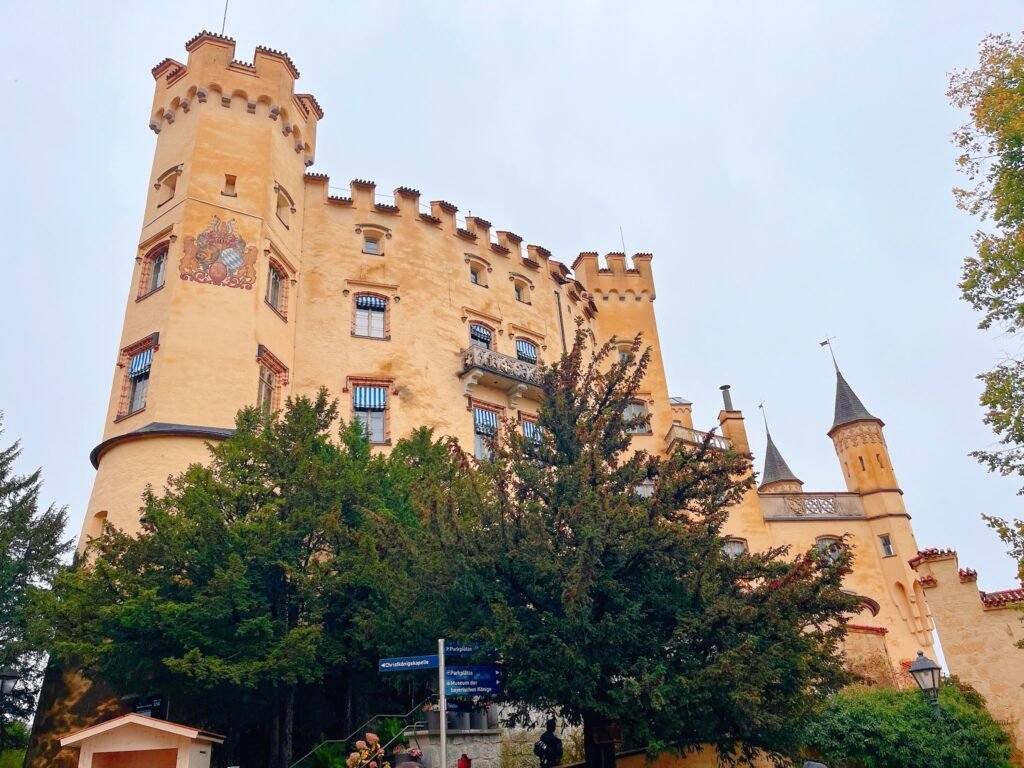
Renovated by his father, King Maximilian II, Hohenschwangau Castle functioned less as a formal royal residence and more as a family home. Located just a short distance from Neuschwanstein Castle, it represents the world of everyday life, in contrast to Neuschwanstein, which embodies Ludwig’s idealized vision. Visiting both castles together makes it easier to understand King Ludwig II as a person, adding depth to his story.
Inside the castle, there were explanations about the environment in which Ludwig II grew up, which I found particularly interesting. His mother is said to have been deeply committed to education, and he was raised under a strict and disciplined system. At the same time, the rooms were decorated with large paintings depicting medieval legends and stories. It is said that these imaginative worlds had a significant influence on his creativity.
Thinking about how Ludwig grew up in this environment, it felt natural that he would later dream of creating a completely different kind of castle—his “ideal” one. With that in mind, my anticipation for visiting Neuschwanstein Castle only grew stronger.
🍁Through the Forest to the Castle: Autumn Scenery
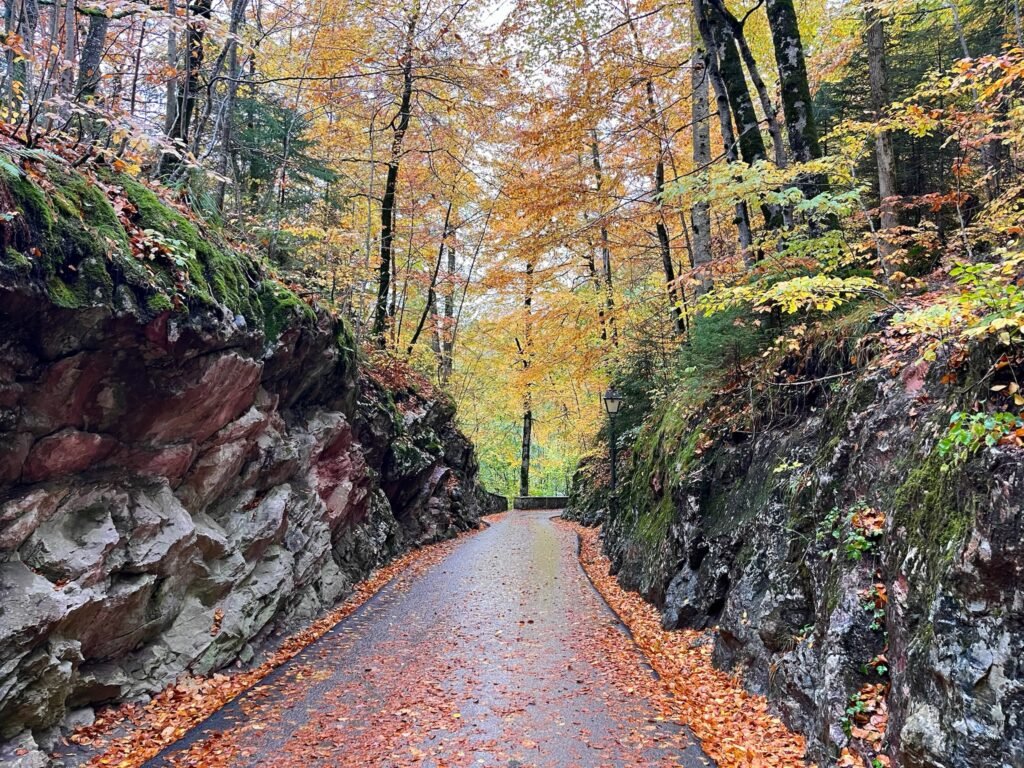
After touring Hohenschwangau Castle, we walked toward Neuschwanstein Castle. This walk turned out to be far more memorable than I had expected.
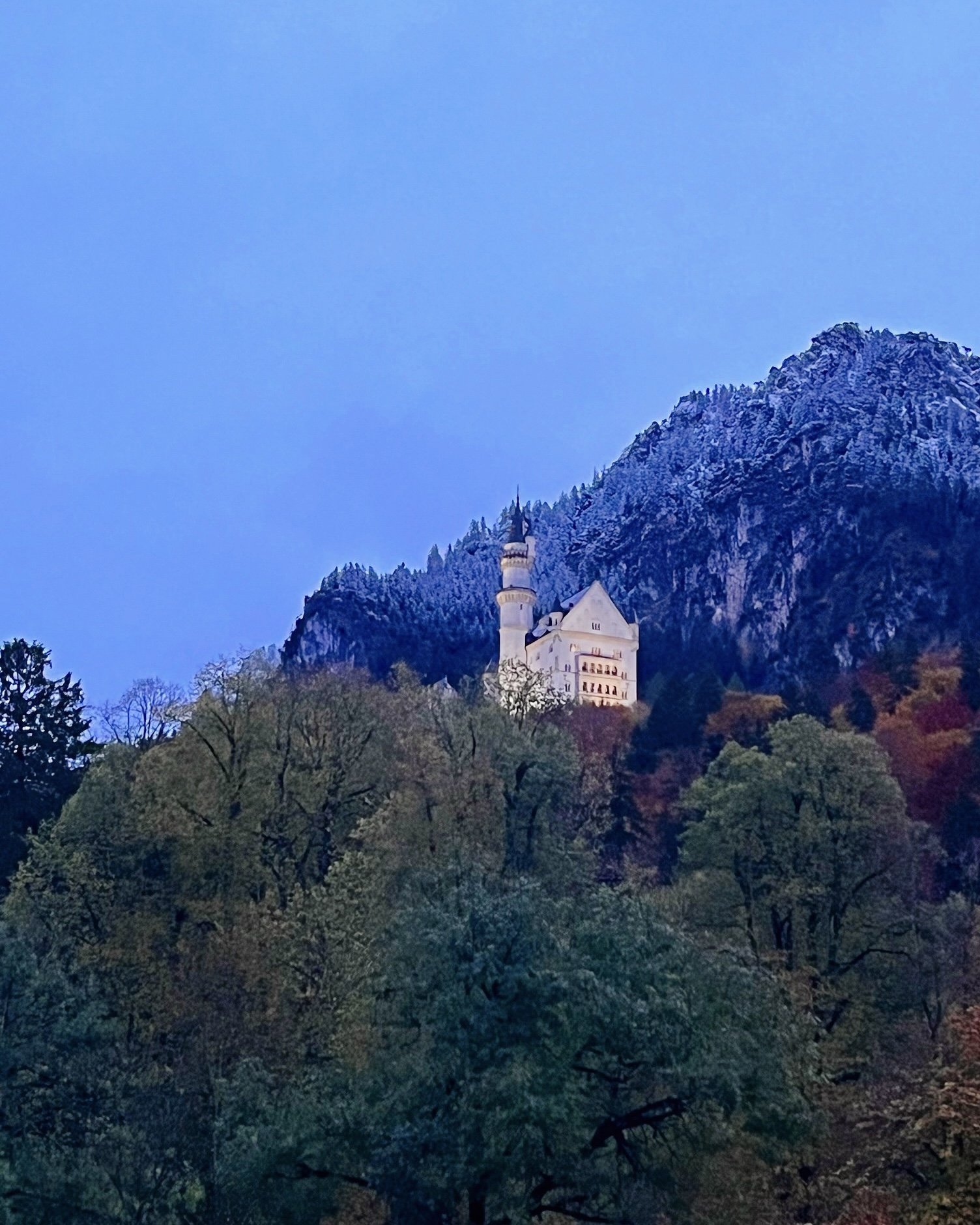
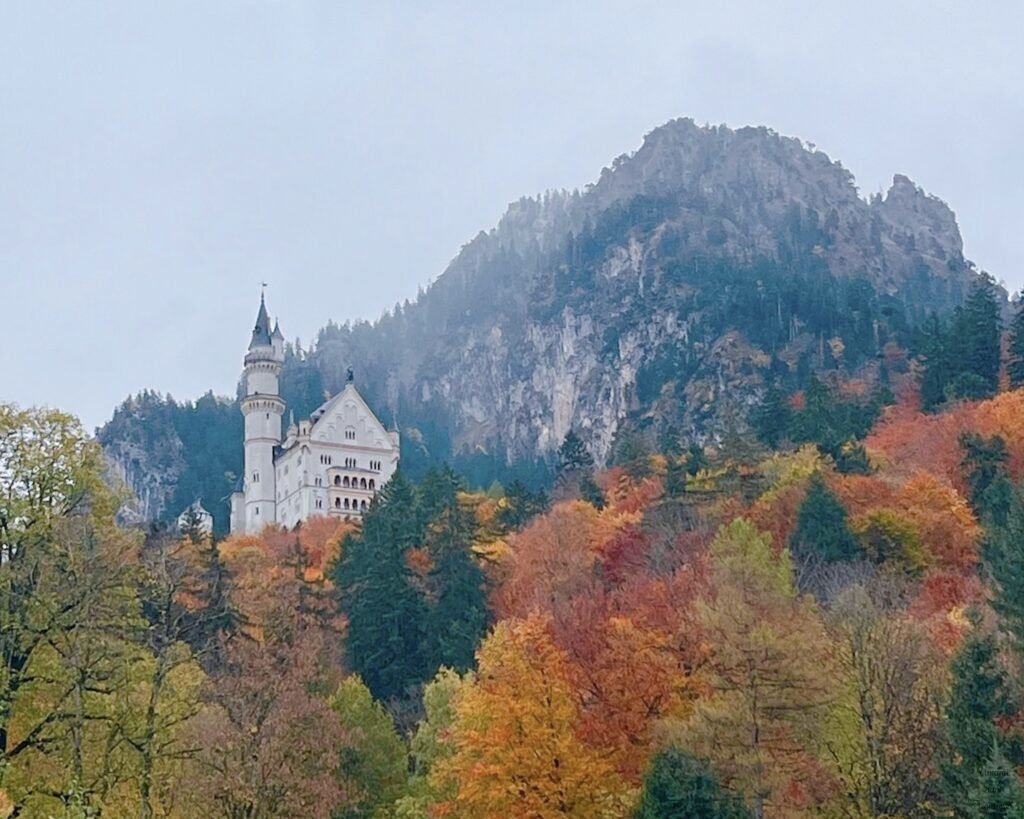
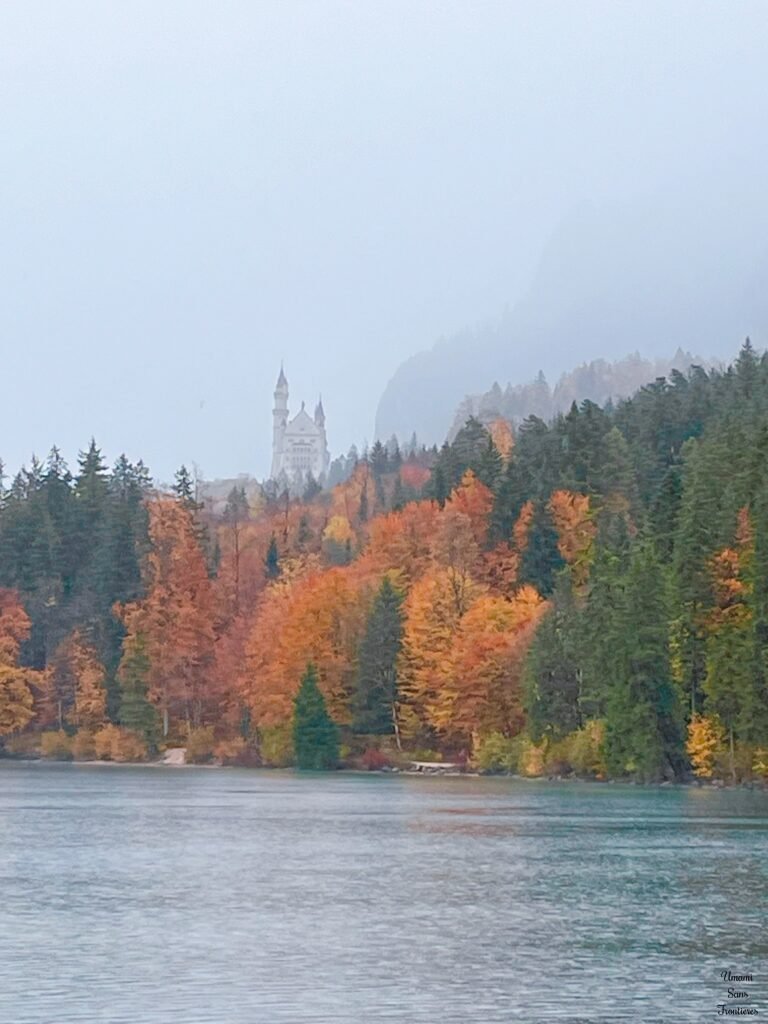
The forest path was bathed in autumn colors, and as we emerged from the trees, the view suddenly opened up to reveal a lake. Wrapped in rain, the lakeshore was quiet and still, with the soft colors of the surrounding forest reflected on the water’s surface.
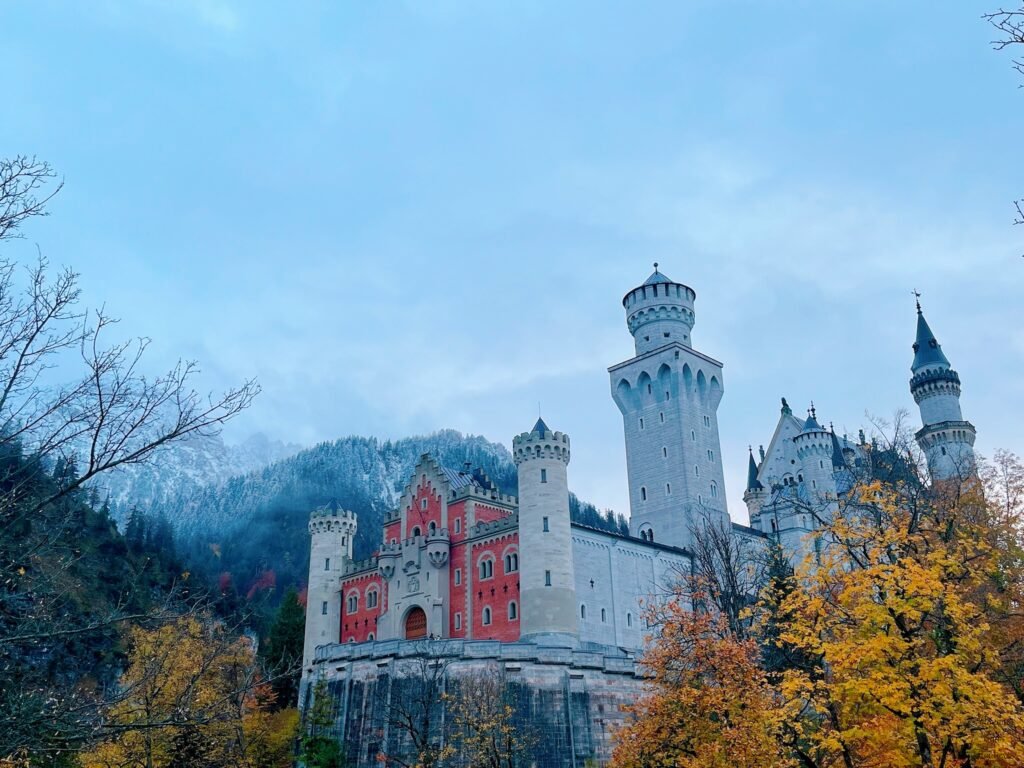
Through the mist, Neuschwanstein Castle gradually appeared above the forest on the far side of the lake. It was not sharply defined, but rather seemed to float out of the fog. Unlike the clear, iconic views seen on sunny days, this rainy scene felt calm and dreamlike—an atmosphere that could only be experienced under these conditions. Autumn is truly a wonderful time to visit.
🏰Neuschwanstein Castle
Like Hohenschwangau Castle, visits to Neuschwanstein Castle are by reservation only and take place as part of a guided tour. Photography inside the castle is not allowed, so unfortunately I was unable to capture images of the interior.
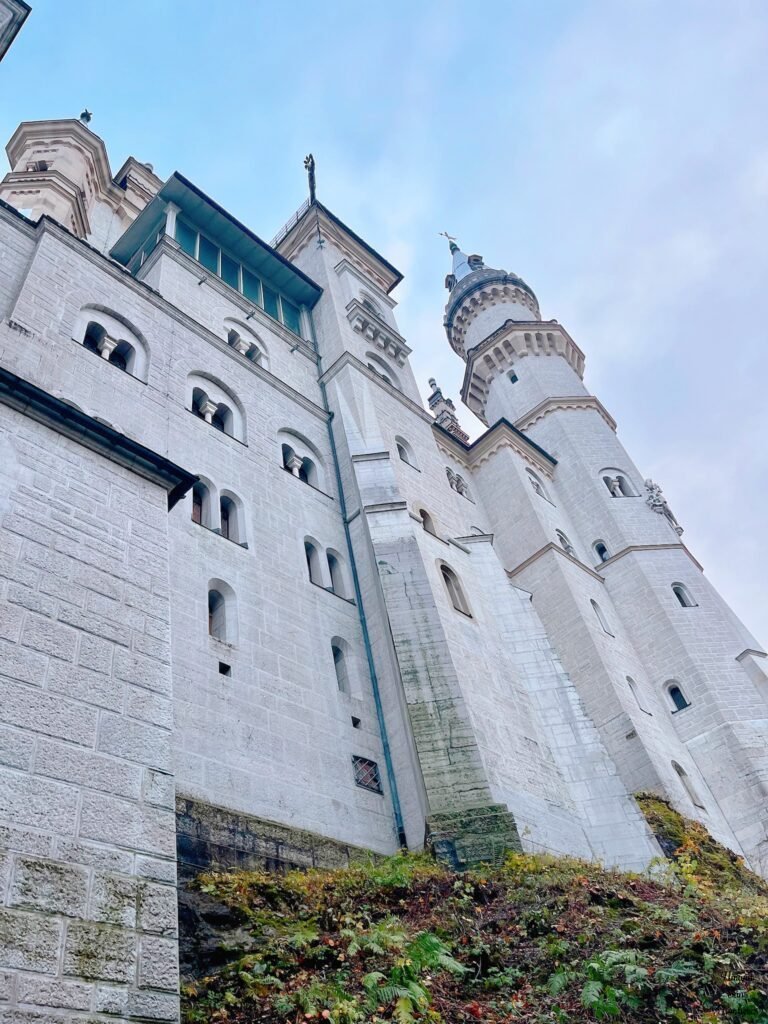
In fact, I had visited this castle once before during my student days. At that time, we traveled from Füssen by horse-drawn carriage. I remember the extensive use of wood in the interior, which gave the rooms a warm and calming atmosphere—very different from the dazzling grandeur of places like the Palace of Versailles.
While the exterior of the castle has not changed much since then, revisiting it now, I felt that the interiors had been carefully restored and appeared even more beautiful than before.
One room that left a particularly strong impression was the Singers’ Hall, where musicians and singers were once invited to perform. The lavish decorations were stunning, with an exotic atmosphere that even evoked elements of Ottoman design.
In contrast, the king’s bedroom was surprisingly small. Every detail was intricately decorated, creating a space that felt luxurious yet deeply personal and inward-looking. Near the bedroom, there was also a hidden door that allowed the king to leave the castle unnoticed. It is said that in his later years, King Ludwig II would slip out at night and ride a sleigh through the surrounding area.
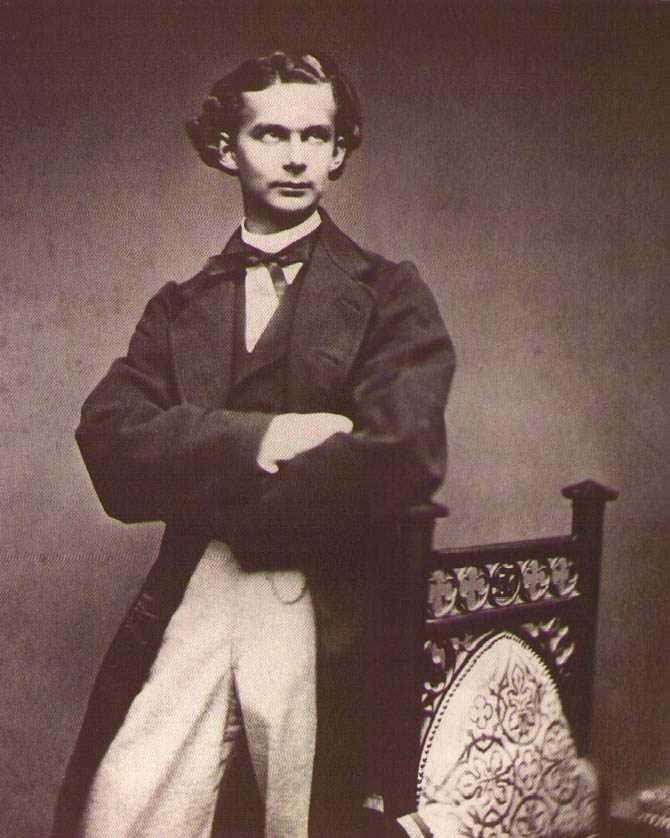
King Ludwig II is well known for his close relationship with composer Richard Wagner, and for his deep fascination with Wagner’s music and mythological worlds. The meticulous attention to detail throughout the castle reflects a man who valued art and idealized worlds above all else.
Architecturally, Neuschwanstein Castle is also remarkable. It was not built on flat, empty land, but on a steep, rugged site. Architects had to work through many challenges to realize the king’s vision under such difficult conditions. In this sense, the castle was not merely a fantasy, but a bold and ambitious architectural undertaking.
During his lifetime, Ludwig II was criticized as a spendthrift and became increasingly isolated due to the enormous costs of his castle projects. It is also true that he may have suffered from mental instability, and that the circumstances surrounding his death remain mysterious.
Yet in later years, the castles he left behind came to be highly valued. Today, they attract visitors from all over the world. Beyond political judgment, it seems clear that Ludwig II made a lasting contribution to architecture and the arts.
As a brief aside, around the same time that Ludwig II lived, the Japanese writer Mori Ōgai was studying in Germany. Inspired by the king’s life, he wrote the short story Utakata no Ki (A Fleeting Tale). Coincidentally, I had just finished reading it before coming to Munich, which made the experience feel strangely connected. Reflecting on how Ludwig II’s life continues to influence people and art across countries and generations, I was once again struck by the deep and lasting appeal of this castle.
🍽️A Final Dinner in Munich
After visiting Neuschwanstein Castle, we returned to Munich and enjoyed dinner in the city. We ended up revisiting a restaurant we had liked before and ordered classic German regional dishes.
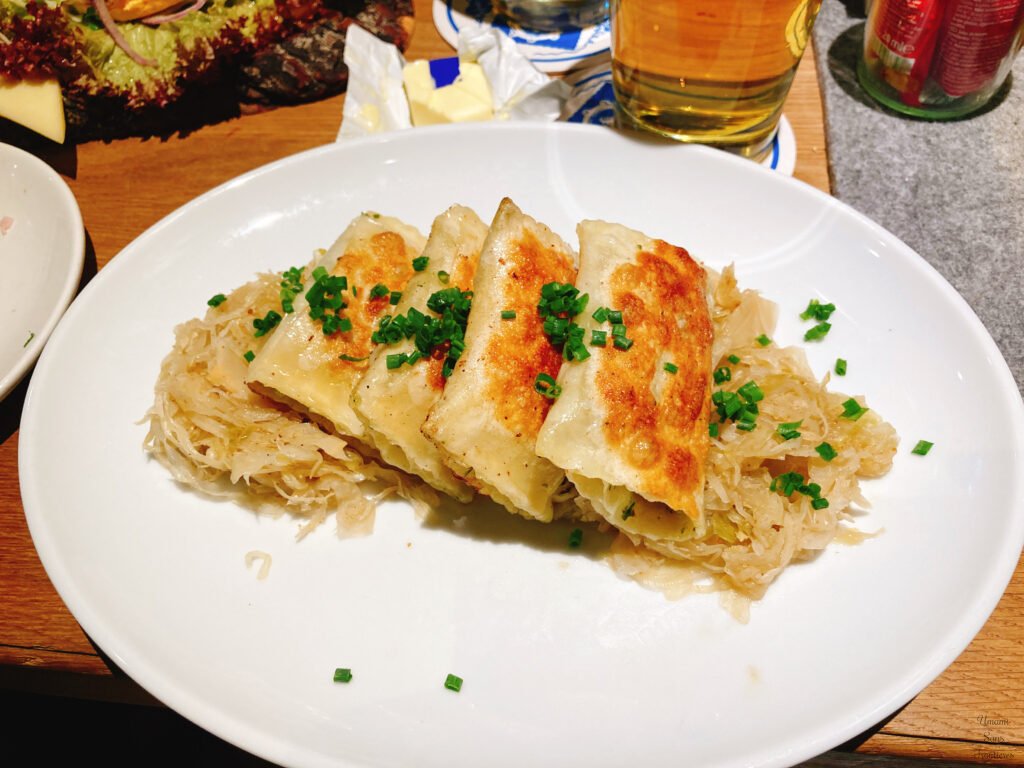
I chose Maultaschen, often described as German-style ravioli, filled with minced meat and spinach—somewhat reminiscent of Japanese gyoza 😊. While they are sometimes served in soup, this time they were pan-fried and accompanied by sauerkraut. The crispy exterior made them especially delicious.
The children ordered Käsespätzle, a Bavarian-style cheese pasta topped with plenty of melted cheese and sautéed onions. Although it looks quite hearty, it has a comforting, rustic quality that made it perfect after a long day of walking. These two dishes quickly became my favorites, and I now make them at home from time to time. I hope to share the recipes in a future post.

After a day filled with fairy-tale landscapes and regional flavors, it was a truly satisfying experience. Our journey continues next with an overnight stay in Salzburg.