
1/ Prepare the Sweet Potatoes: Wash the sweet potatoes thoroughly and cut them in half.
2/ Prevent Oxidation: Make a shallow square cut on the cut surface of each sweet potato using a knife. Drizzle with lemon juice to prevent oxidation.
3/ Arrange on Baking Sheet: Line a baking sheet with parchment paper or prepare a heat-resistant dish. Place the sweet potato halves cut-side up.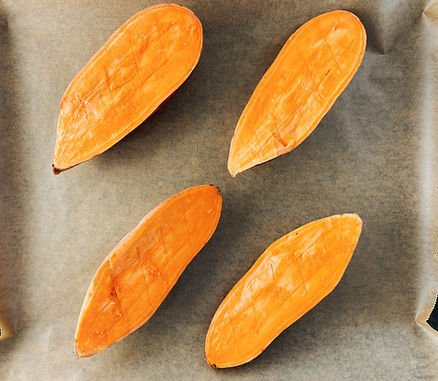
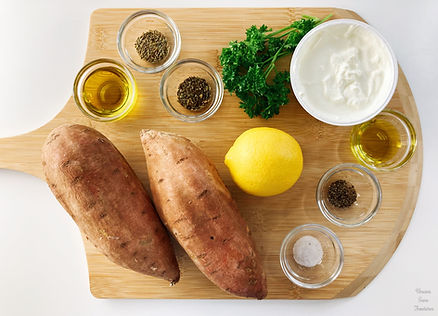
4/ Make the Herb Oil: In a small bowl, combine olive oil, dried herbs, and salt. Mix well.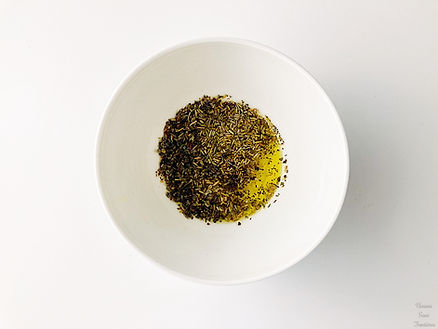
5/ Season the Sweet Potatoes: Using a brush, coat the surface of the sweet potatoes with the herb-infused olive oil from step 4.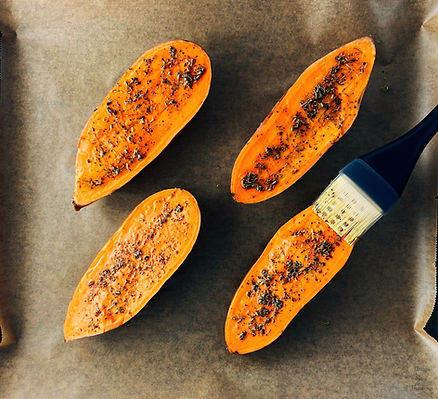
6/ Bake: Bake in a preheated oven at 180°C (350°F) for 40 to 50 minutes, or until tender and slightly caramelised on the edges.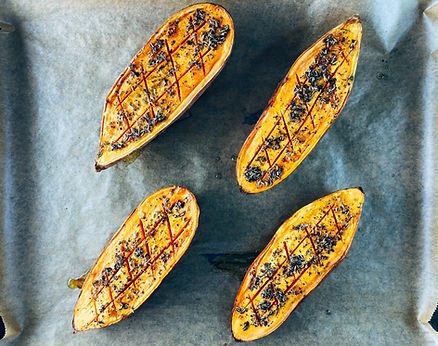
7/ Prepare the Yogurt Sauce: While the sweet potatoes are baking, prepare the sauce by mixing plain yogurt, olive oil, lemon juice, chopped parsley (optional), salt, and pepper in a bowl. Stir until smooth.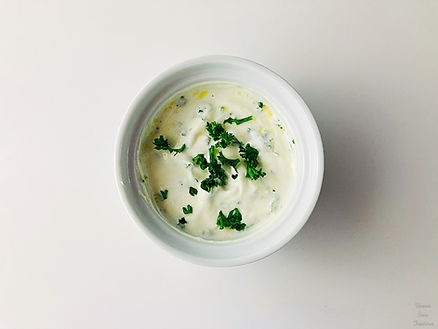
🌟Simple Ideas to Make This Dish Your Own🌟
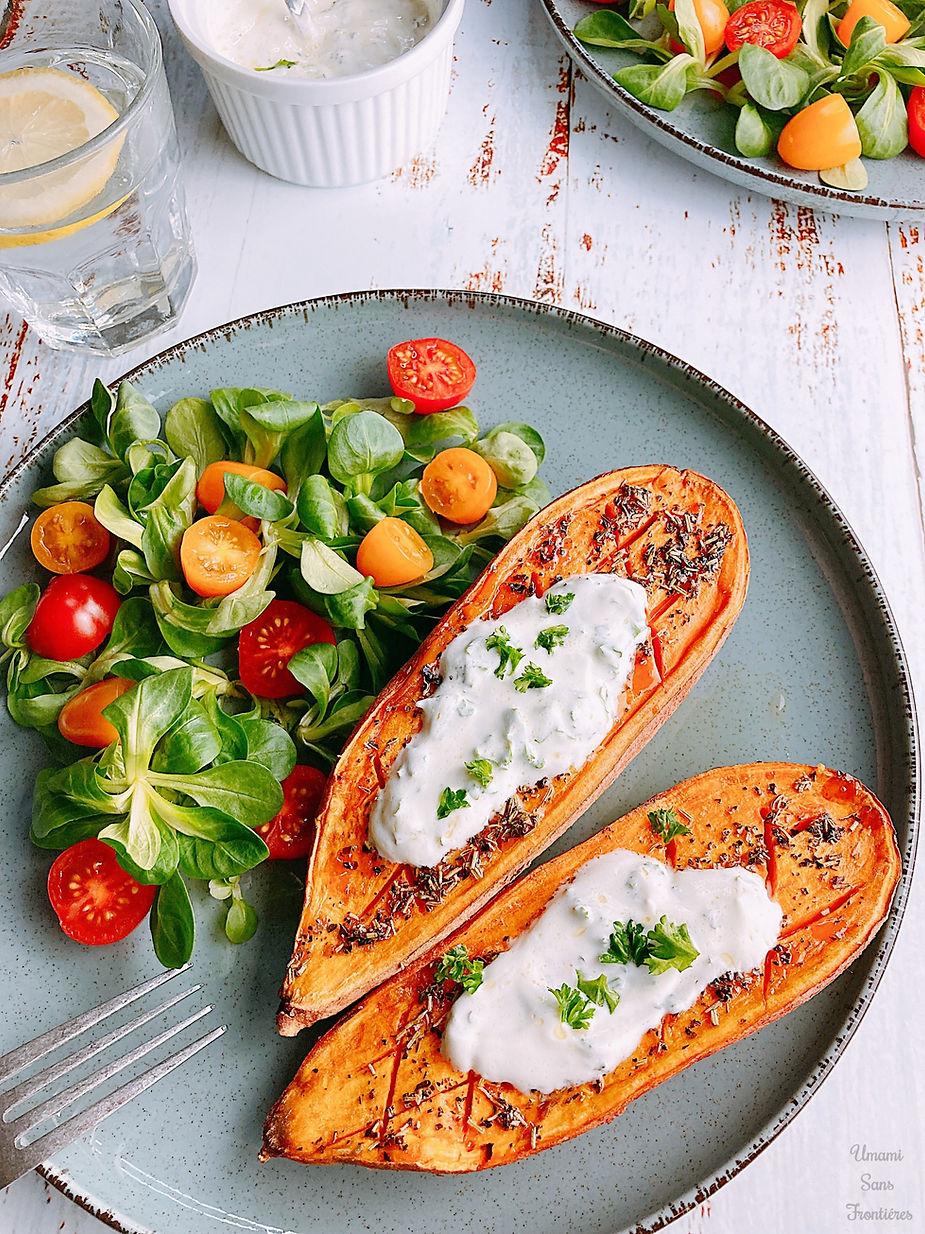
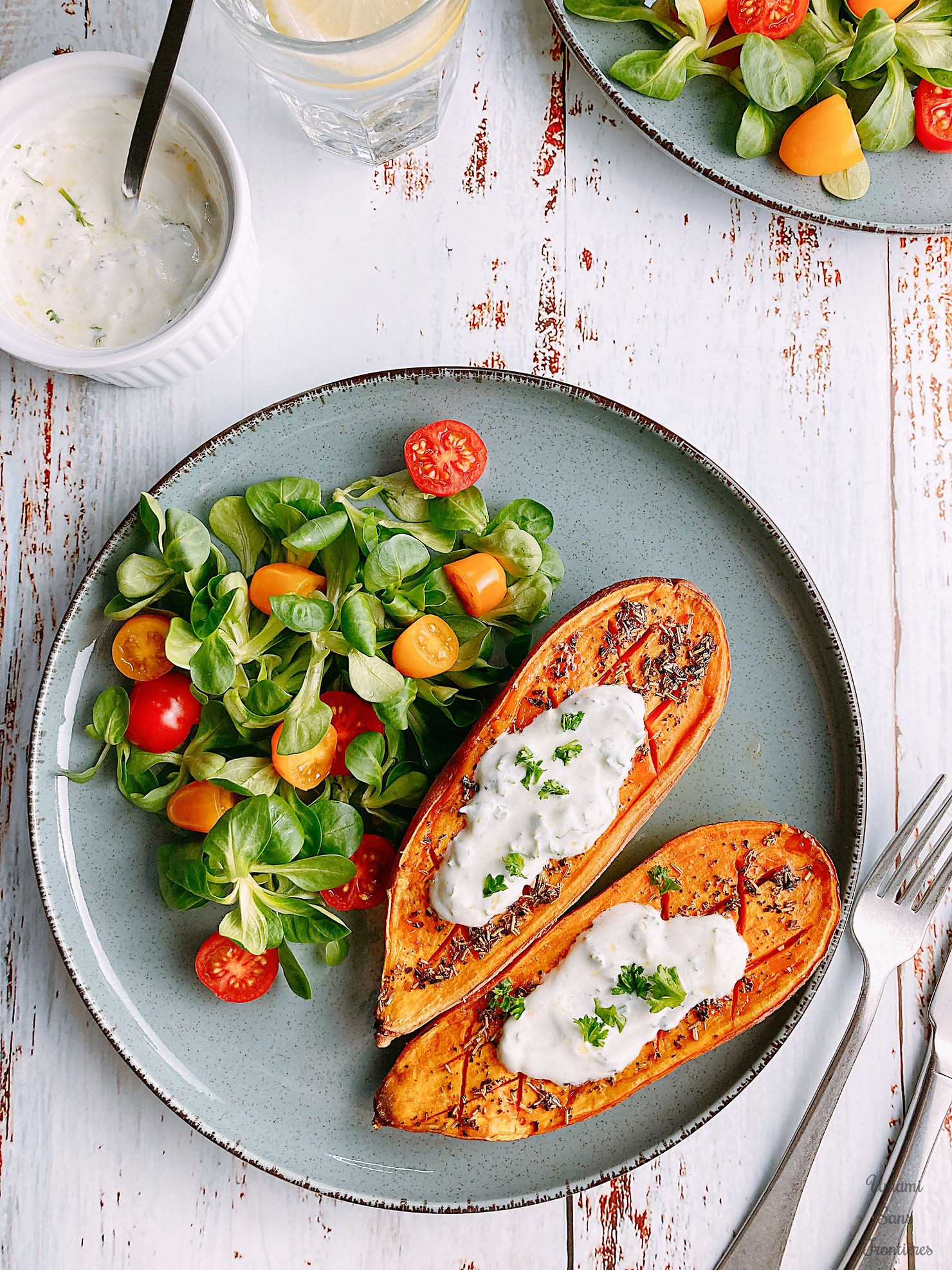
⭐️ Make It a Complete Veggie Plate: Pair these baked sweet potatoes with a fresh salad—just like in the photo—for a colorful, well-balanced vegetable-only menu. It’s a great way to enjoy a light, healthy, and satisfying meal without meat or fish.
⭐️ Perfect for Lunch or a Light Dinner: This dish is ideal when you’re looking for something filling yet not too heavy. Whether it’s a casual weekday lunch or a gentle, nourishing dinner, it’s a flexible option that works any time of day.
⭐️ Enjoy the Sweetness – With or Without Sauce: The natural sweetness of the sweet potatoes goes beautifully with the tangy yogurt sauce. But they’re also delicious on their own—simple, soft, and naturally sweet. Choose the version that suits your mood!
⭐️ Adjust Baking Time to Your Oven: Oven performance can vary by model. Use the suggested temperature and time as a guide, but check for doneness and adjust if needed. The sweet potatoes should be tender inside and slightly golden on the edges.
⭐️ Know Your Sweet Potatoes: Japan vs. Europe🍠: If you’re used to Japanese sweet potatoes, you’ll notice some differences when cooking with European varieties. Japanese ones are typically smaller, with a denser texture and naturally sweet, fluffy flesh—perfect for that soft, “hokuhoku” bite. In contrast, European sweet potatoes are often larger, more moist, and have a striking orange-colored interior, which may come as a surprise at first! Both types work well for this recipe, but keep in mind that moister varieties may need a little longer in the oven to achieve the right texture.