My Third Visit to Venice
A few years ago, we visited Venice during my children’s Easter holiday.
This was actually my third time in the city.
The first time was during my student years in France, when I traveled with a friend.
Venice felt like a maze—endless narrow alleys that all looked exactly the same.
We kept going in circles, thinking we were getting closer, only to realize we had somehow returned to the same spot again.
At that time, Venice wasn’t as tourist-friendly as it is today. Some streets were dark and quiet, with very few people around. Since our hotel was near the station, I kept asking locals, “Dov’è la stazione?” over and over again, trying to find my way back.
In the end, that was the one Italian phrase I never forgot 😅. It didn’t feel funny at the time—but it certainly does now.
The second visit was in summer with my husband.
I still remember walking barefoot across St. Mark’s Square after the rain, when parts of the square were covered in water. We also explored the nearby islands, which were just as charming.
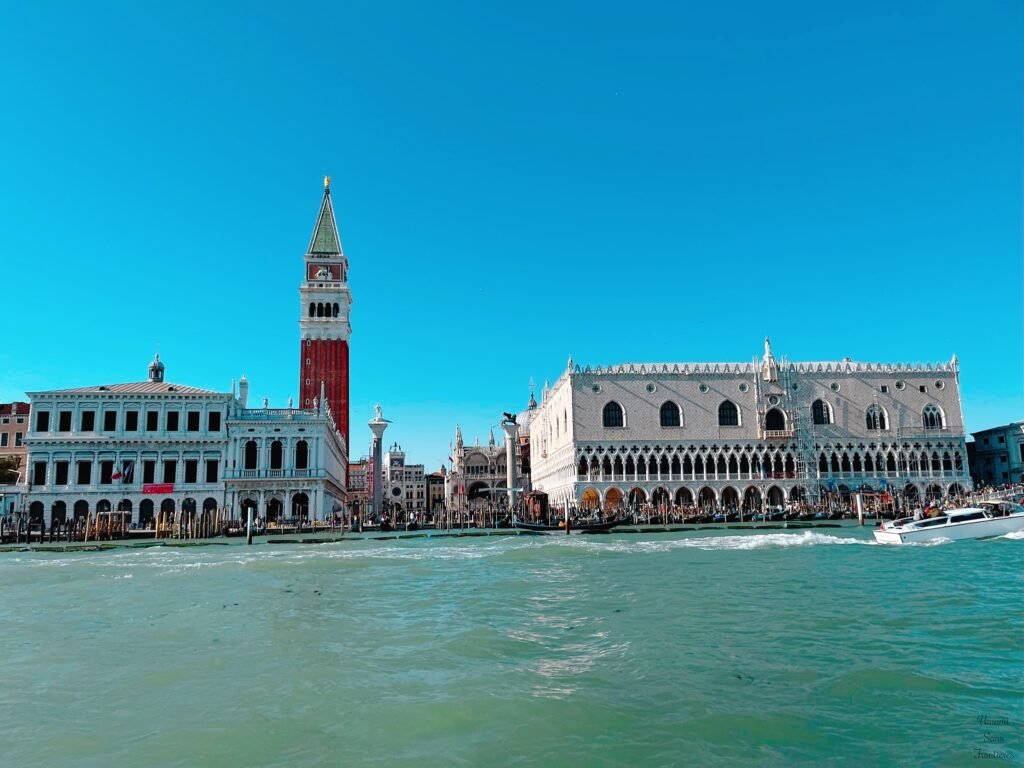
And this third visit—this time with my family—took place in April. It was still a little chilly, but that only added to the atmosphere.
What fascinates me is how the same city can feel different depending on the season and who you travel with. And yet, Venice remains one of my favorite cities in Italy—its beauty never fails to leave an impression.
In this first volume, I would like to introduce some of the most iconic areas of Venice that left a strong impression on me.
The First Evening: Near Rialto Bridge
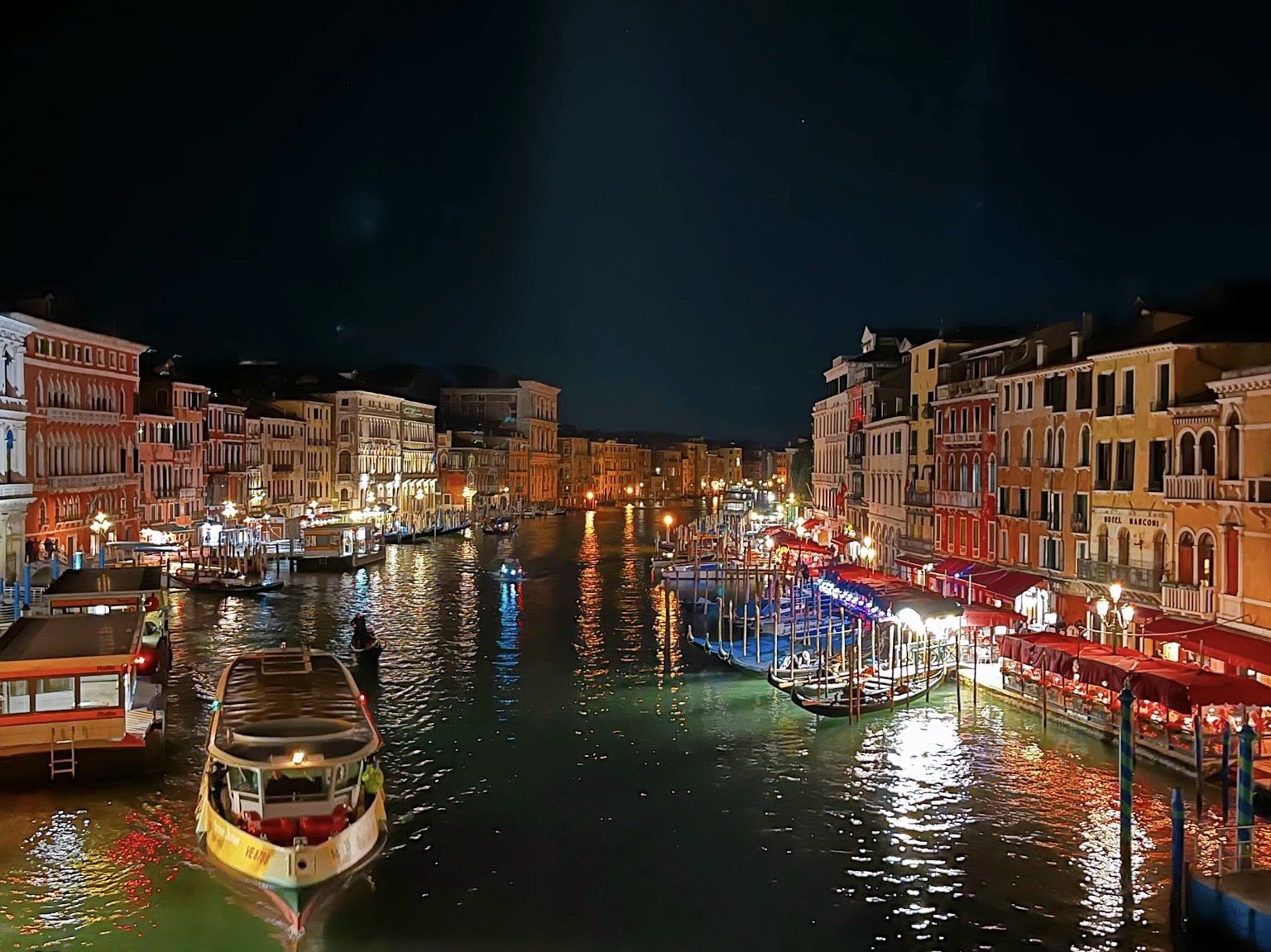
We arrived in the afternoon and took a short walk through the city. Rialto Bridge was already full of people.
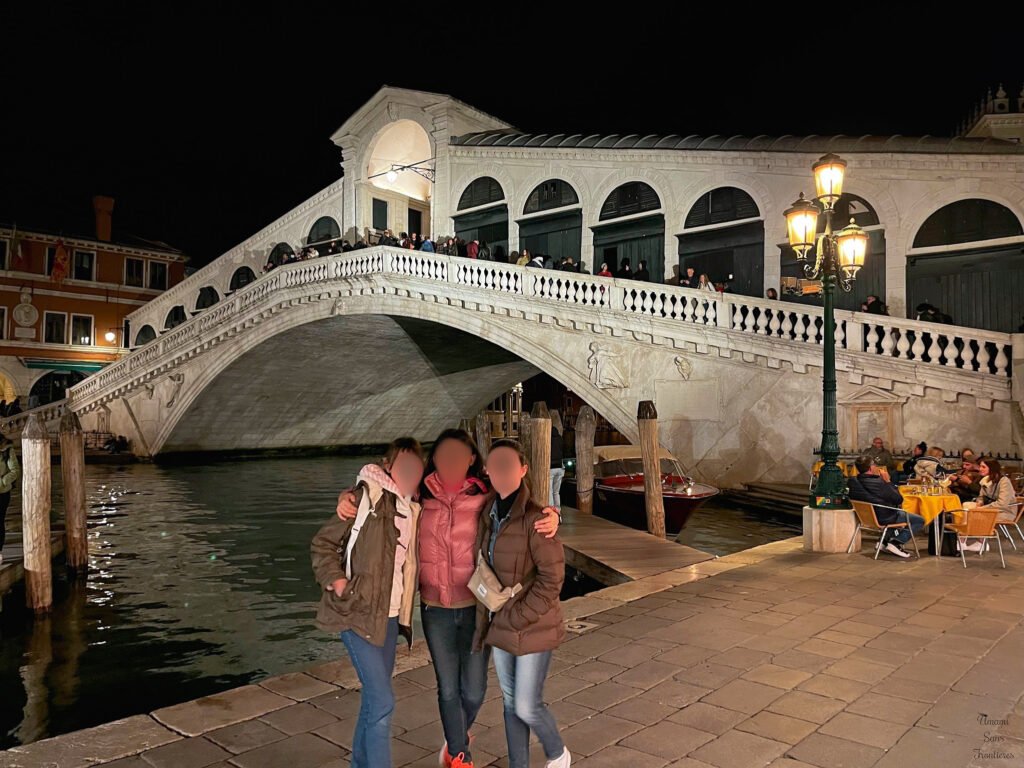
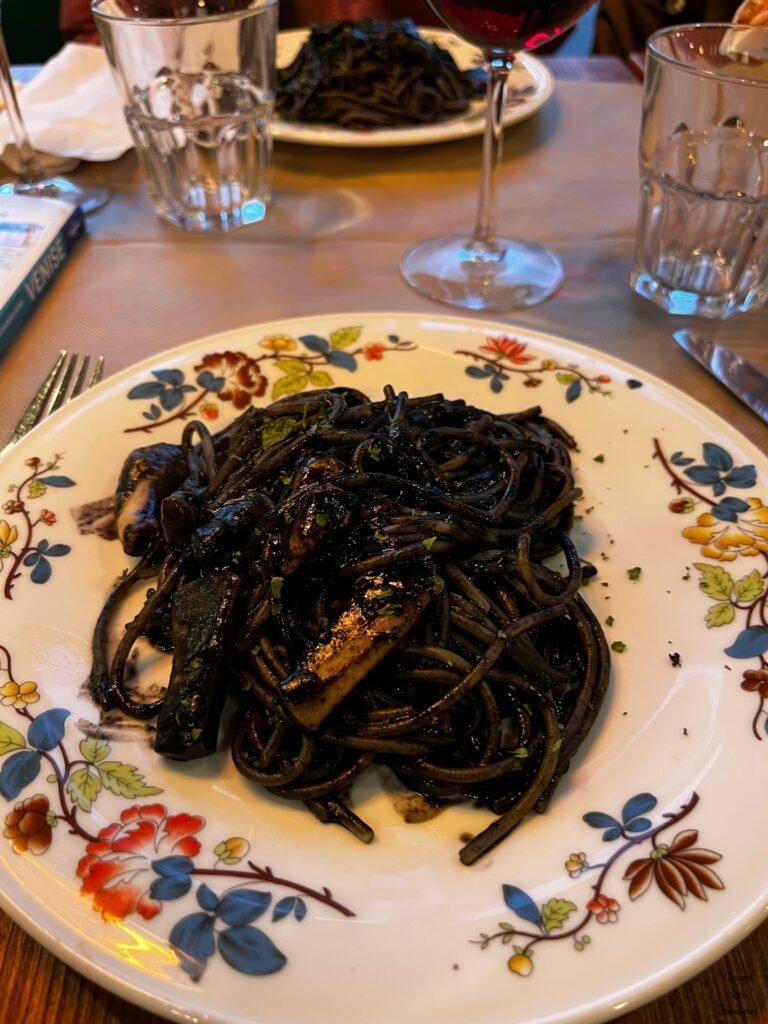
Tired from travel and quite hungry, and still unfamiliar with the layout of the city, we simply walked into a nearby restaurant.
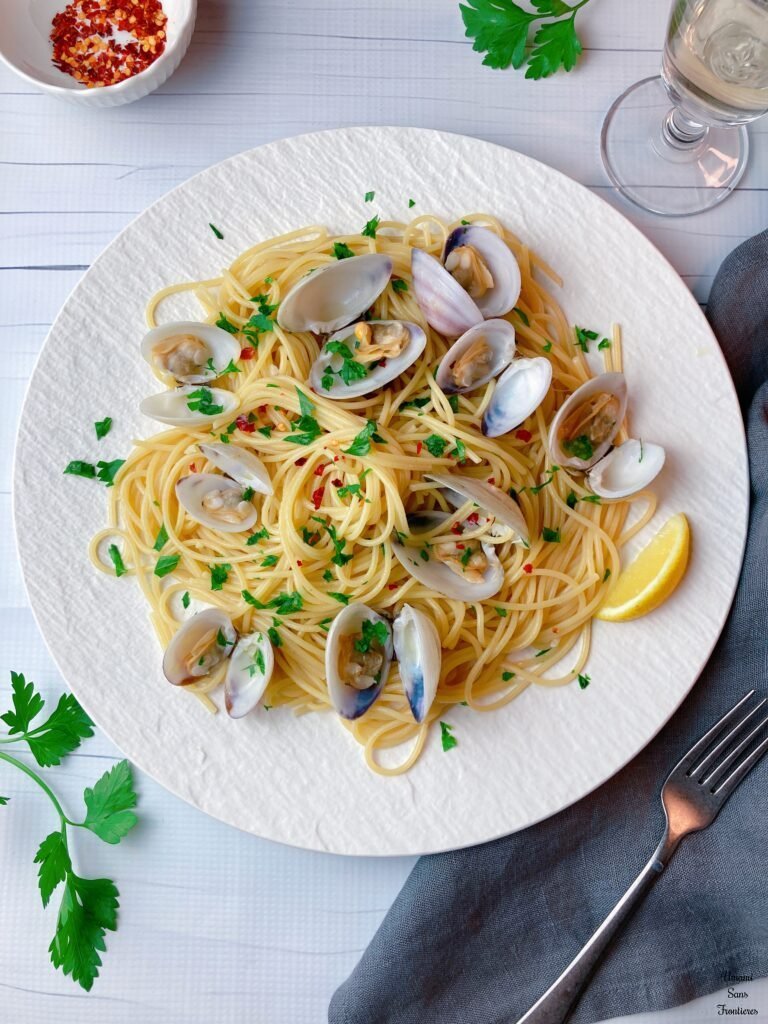
Rialto Bridge, built in the late 16th century, was once the commercial heart of Venice. The restaurant had a lively, touristy atmosphere, but the squid ink pasta we had there felt like the perfect introduction to the city.
St. Mark’s Square — Where East Meets West
The next morning, we headed to St. Mark’s Square early.
Standing there, I was struck by the openness of the space and the beauty of the surrounding architecture.
This square was once the political and religious center of the Venetian Republic—its true heart.
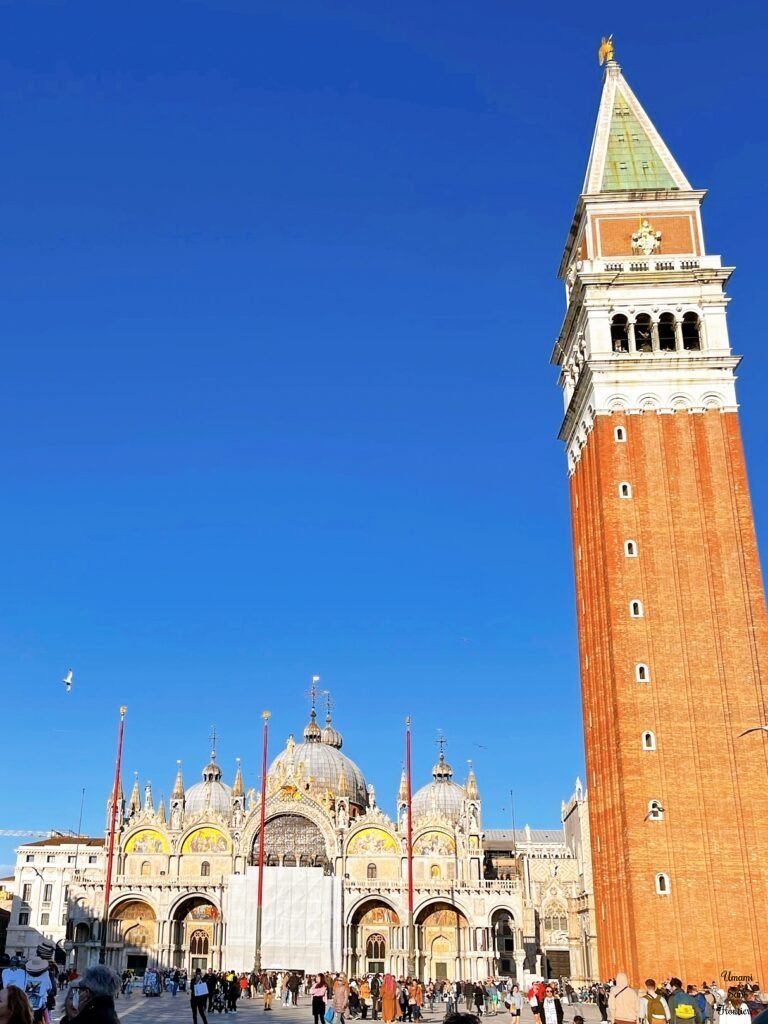
St. Mark’s Basilica, in its present form, dates back to the 11th century, when Venice was emerging as a powerful maritime republic.
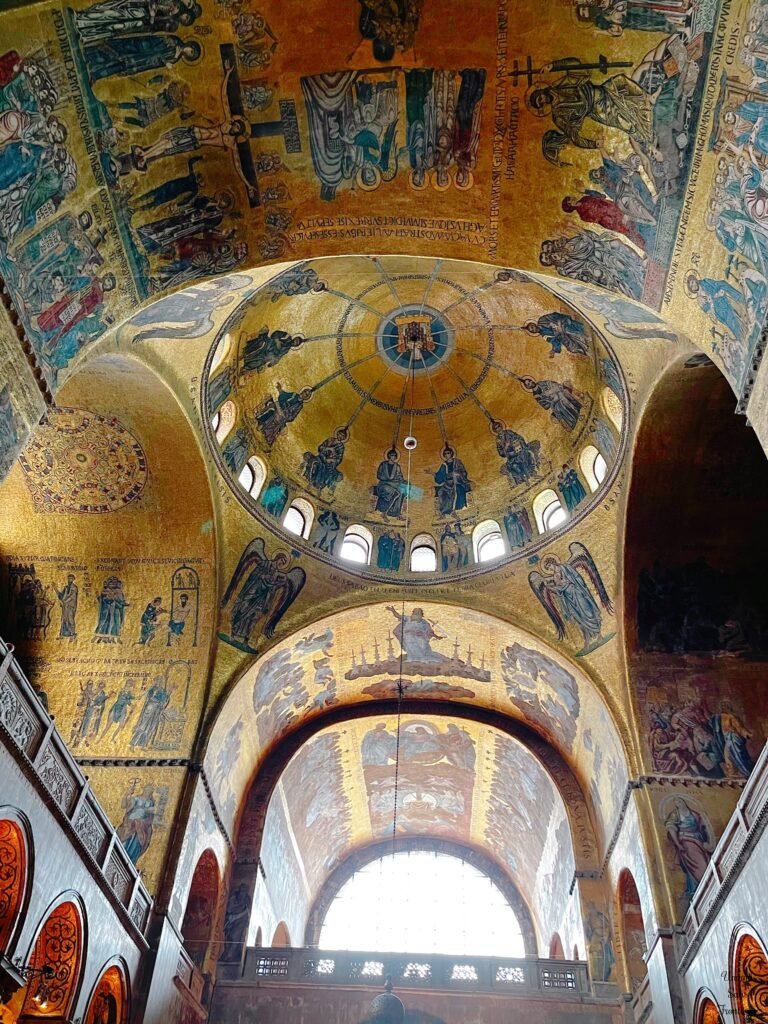
Inside, the space is covered in golden mosaics. This decoration shows a strong Byzantine influence. Venice maintained close ties with the Eastern Roman (Byzantine) Empire and prospered through trade with the East. As a result, Eastern elements found their way into its architecture and decoration, giving the city a distinctive character unlike that of Rome or Florence. This unique atmosphere is something I personally find very appealing.
Napoleon and the Horses of St. Mark’s
Venice flourished as an independent republic for centuries, but in 1797, Napoleon’s invasion brought that long history to an end. The horses displayed at the basilica particularly caught my attention. I had the strange feeling that I had seen them somewhere before.
Originally from Constantinople, they were brought to Venice and later taken to Paris by Napoleon. Today, the horses displayed outside are replicas—the originals are kept inside the museum. Seeing them up close, I could feel not only their presence, but also the weight of the history they carry.
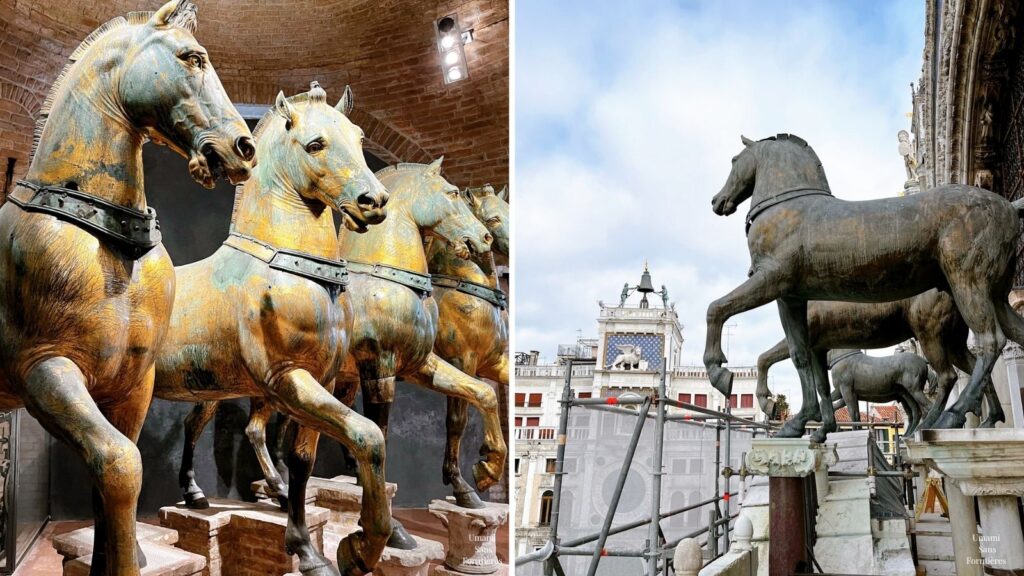
Interestingly, the quadriga on Berlin’s Brandenburg Gate was also taken to Paris by Napoleon. Although the two are not directly related, it was fascinating to realize how European cities are connected through shared historical moments.
Doge’s Palace — Venice as a State
We then visited the Doge’s Palace.
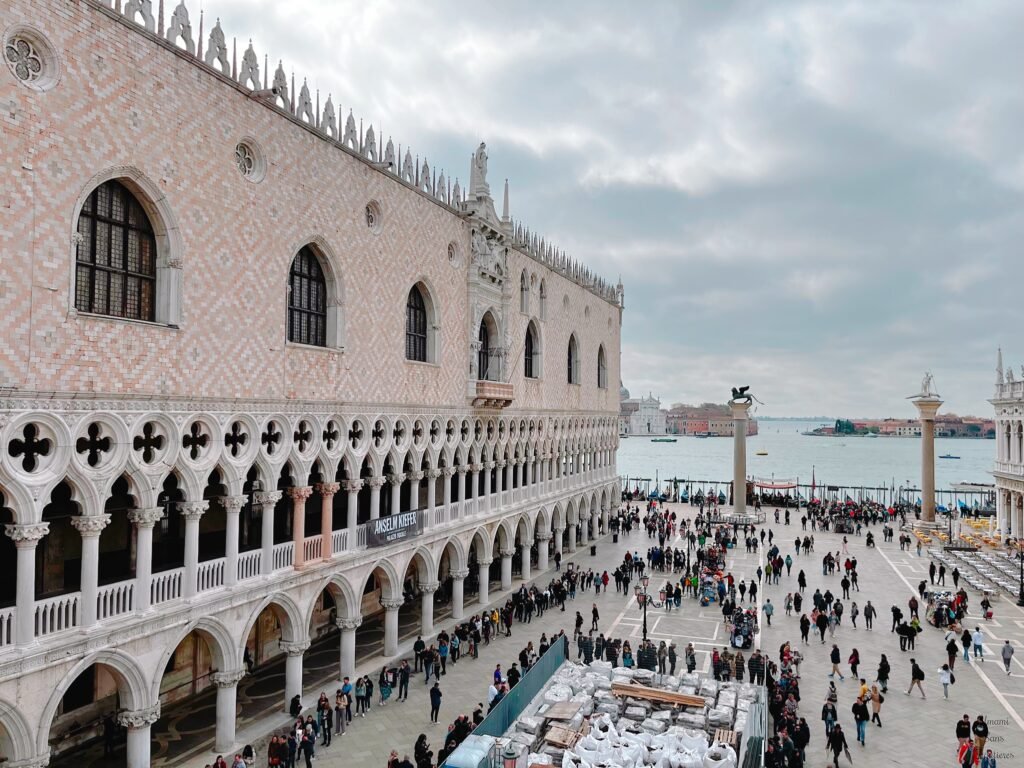
Built mainly between the 14th and 15th centuries, it was the political center of Venice during its height as a republic.
It was not only the residence of the Doge, but also the center of government and justice.
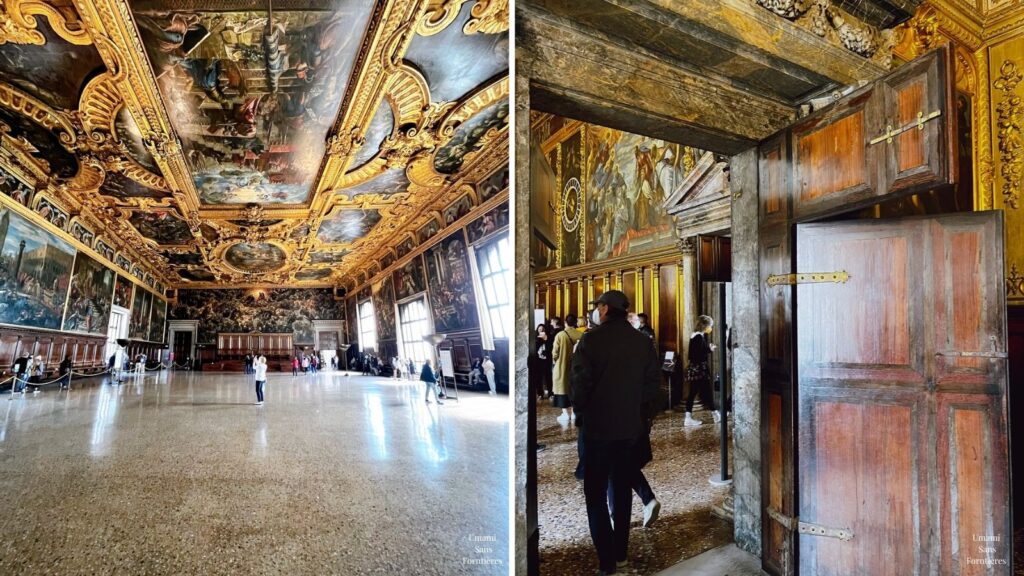
Inside, each room had a clear function, and it was easy to imagine how the system once operated.
This was not just a beautiful building—it reflected a well-organized and functioning state.
It felt very different from Rome or Florence, offering insight into Venice’s unique historical path.
Casanova and the Prison
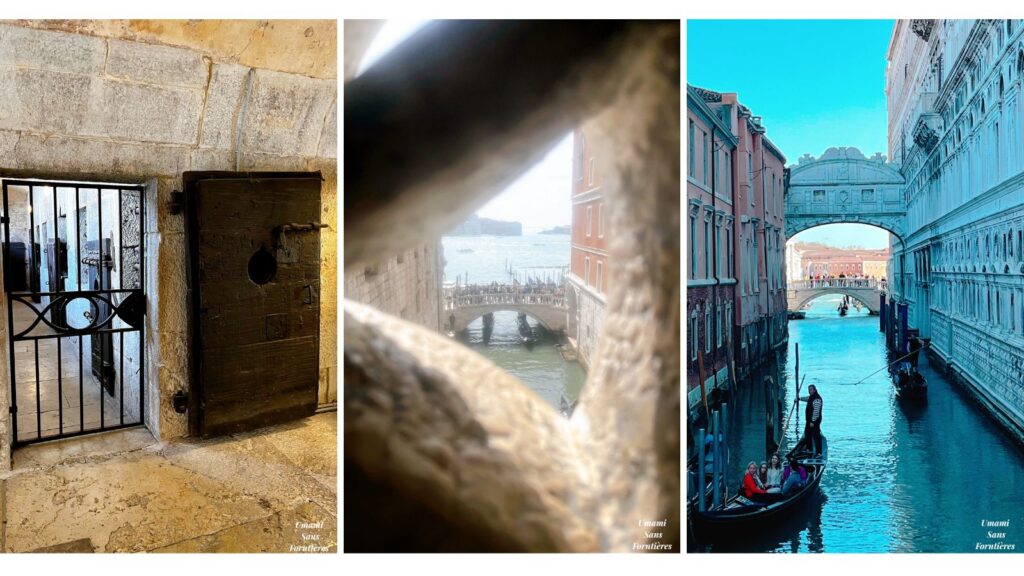
The prison inside the palace was particularly memorable.
The palace also housed courts of justice, and after sentencing, prisoners were led across the Bridge of Sighs to their cells. For those condemned to severe punishment, this was said to be their last view of the outside world.
The prison is also known for having held Casanova. He was an 18th-century figure whose name many people may have heard. He famously escaped from here, and knowing that makes the space feel surprisingly real.
We were also able to walk through the inside of the Bridge of Sighs ourselves.
Thinking about the prisoners who once crossed this passage changes how you see the space.
The View from St. Mark’s Campanile
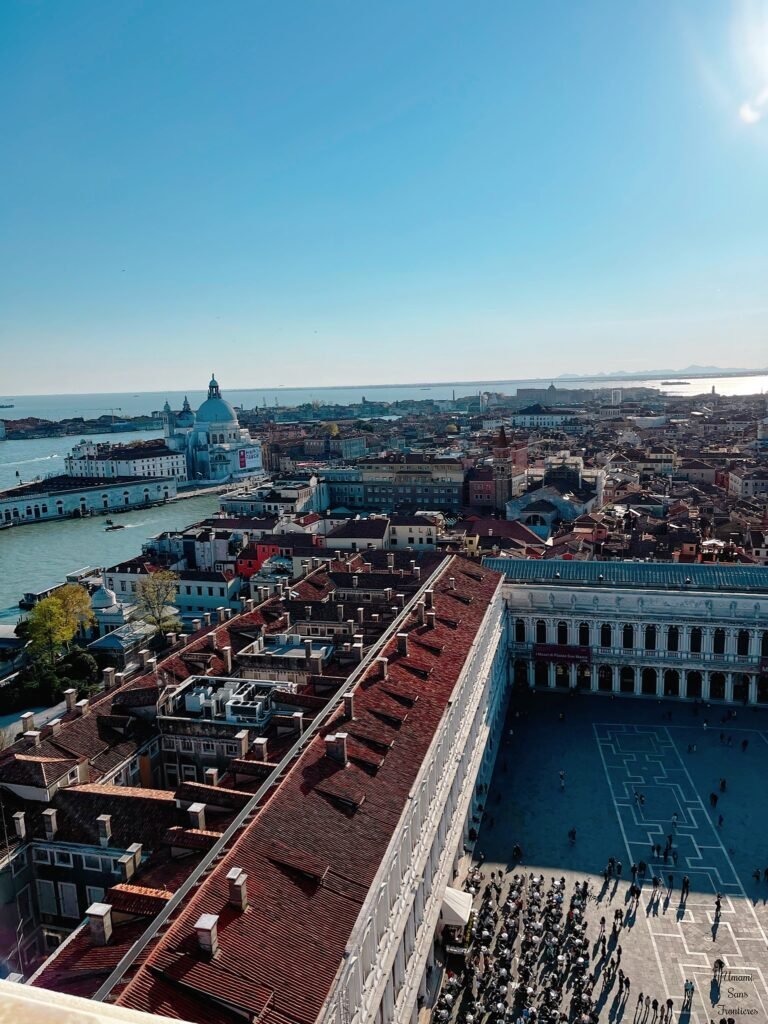
We also climbed the bell tower across from St. Mark’s Square.
The current tower was rebuilt after collapsing in 1902, reconstructed exactly as it had been before—proof of how important it was as a symbol of the city. It once served as a watchtower, guiding ships approaching from the sea, and its bells marked time and important events.
From the top, we could see the entire city—its canals and rooftops spreading out below us. The maze-like structure of Venice suddenly became clear. The way water and buildings blend together is something unique to this city.
A Moment at a Historic Café
To end the day, we stopped at a historic café in St. Mark’s Square.
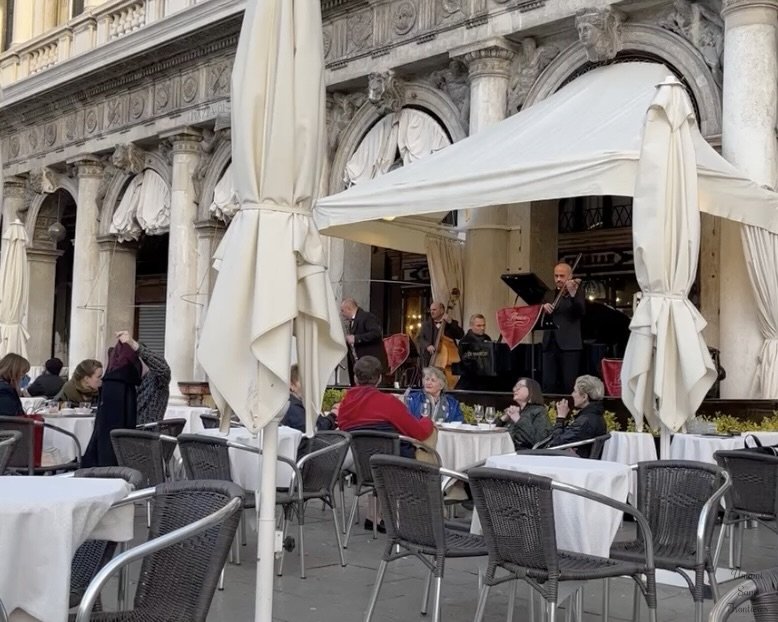
Founded in the 18th century, it still hosts live music performances. Sitting there with a Negroni in hand, surrounded by music and movement, felt like stepping into another era.
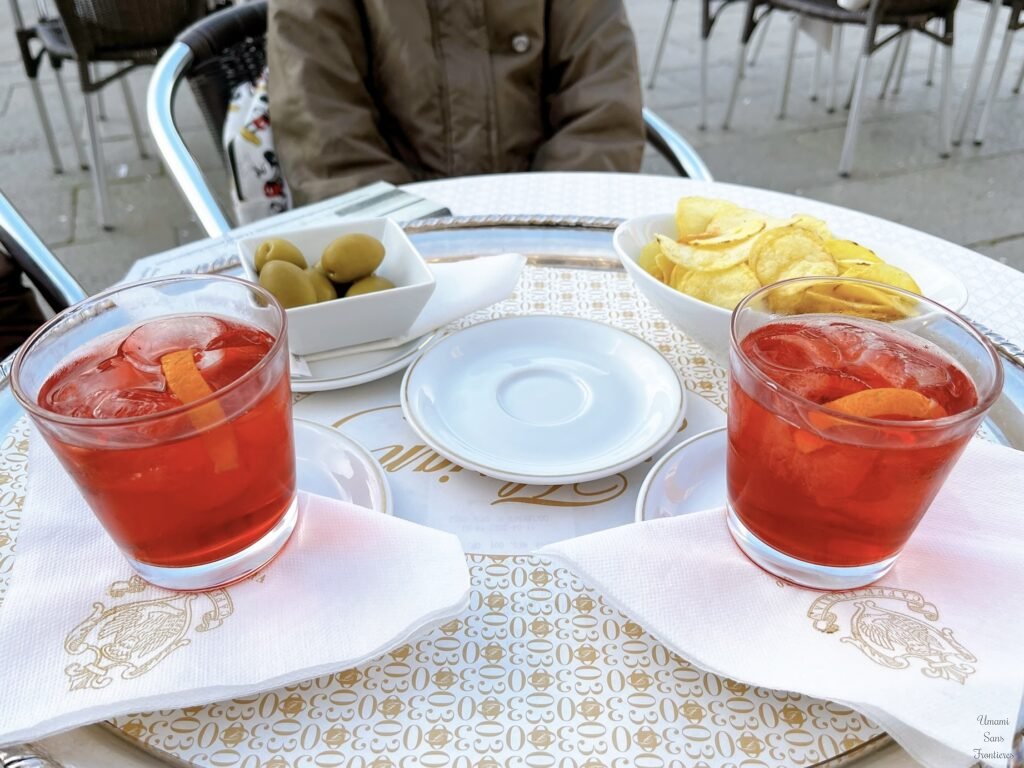
It is said that Casanova himself once frequented this café. Imagining the conversations and encounters that took place here adds another layer of charm to the experience.
A City That Always Reveals More
Venice is already captivating simply for its atmosphere. But beyond that, it is a place where history, culture, and everyday life come together. Each visit reveals something new. And yet, there is still so much more to discover.
The journey continues….in the next chapter!